During a holiday in Australia in 2019, I became fascinated with the early history of Sydney and the people who were transported there at the end of the eighteenth century. I went on a guided historical walk around the Rocks, the oldest part of Sydney and I was hooked.
We stayed with my cousin near Brisbane for a few weeks and he lent me an interesting book. It was entitled ‘1788’, edited by Tim Flannery, and includes two books written by the delightfully named, Watkin Tench. You can see it here in Amazon.
Watkin Tench sailed to Australia with the First Fleet in 1788. In his late twenties, a captain of the marines, he was insatiably curious about the new British colony in New South Wales. During his four years in the country, he wrote two books about the early settlement which were bestsellers in their day – A Narrative of the Expedition to Botany Bay (1789) and An Account of the Settlement at Port Jackson (1793) – the two books included in Tim Flannery’s ‘1788’.
When I got home, I read as much as I could find about the transport of criminals to New South Wales and the early settlement in Sydney Cove. I wanted to write a historical saga set at this time and I imagined a fictitious ship which I named after my mum – the Lady Amelia. I loosely based it on the two transport ships that carried female prisoners, the Lady Penrhyn and the Lady Juliana.
I called the story ‘The Duchess of Sydney’ and submitted it to My Weekly Pocket Novel editor, Maggie Swinburne. She accepted it and published as a Pocket Novel in 2020. Later, it was published by Ulverscroft Ltd as a large print paperback. Now, I’ve published the same story as an ordinary paperback and eBook. Cover designer Paul Burridge of PublishingBuddy designed a super new cover for me and the manuscript was edited by Wendy Ogilvie of Wendy Ogilvie Editorial.
‘The Duchess of Sydney’ Betrayed by her family and convicted of a crime she did not commit, Georgiana is sent halfway around the world to the penal colony of Sydney, New South Wales. Aboard the transport ship, the Lady Amelia, Lieutenant Francis Brooks, the ship’s agent becomes her protector, taking her as his “sea-wife”, not because he has any interest in her but because he has been tasked with the duty. Despite their mutual distrust, the attraction between them grows. But life has not played fair with Georgiana. She is bound by family secrets and lies. Will she ever be free again – free to be herself and free to love?
It’s thanks to the Basildon Writers’ Group and in particular, Jenny Drew, who started the group, that ‘The Crispin Chronicles’ was ever written. Jenny used to set a writing prompt each month and for one particular month, she gave us a list of disparate items which needed to be included in a story. We had to select from the list and I chose: a sombrero, a child’s tractor, a raincoat, a pair of flip-flops, a bottle containing noxious liquid and a fishing rod. Somehow, that list lured me into Her Ladyship’s Garden where Garden Ornaments, such as Marble Elves, a Gnome with an identity crisis, a Wooden Robin, Pole-Dancing Fairies, a Cockney Leprechaun, a flatulent Toad and so many other characters live together – not always in harmony but somehow getting along. Bartrum, the Head Gnome, rules over the Garden with a heavy hand and he often coerces Crispin, the gentle Marble Elf to do his bidding. The threat of Cess Pit duty often being used as an incentive!
The first story was written in about 2,000 words to read out at the Basildon Writers’ Group monthly meeting and it was very well-received, so the following month, I wrote another story involving the same characters and added a few more. After a few months, I began to wonder what to do with the stories. I sent them off one by one to Gill James at CafeLit where a story is published each day (CafeLit can be found here) along with a suggested drink. Gill agreed to put all the stories together and publish them once each one had appeared on the CafeLit site. And ‘The Crispin Chronicles’ was born!
It’s now part of the ‘Chronicles Chronicles’ series, published by Chapeltown Books, along with ‘The Basilwade Chronicles’ and ‘The Macaroon Chronicles’ which contain different characters but are written in the same style.
Join Crispin, the Marble Elf, in Her Ladyship’s secret, fantastical Garden, where Gnomes, Cockney Leprechauns, Cherubs, Trolls and Pole-Dancing Fairies live, love and laugh. But watch out for the Shed of No Return – the clue is in the name. And keep upwind of the begonias where Gusty Bob, the flatulent Toad is usually found. Oh, and don’t trip over the Wooden Robin; he’s likely to stop at short notice to pull up his socks.
‘The Crispin Chronicles’ is published by Chapeltown Books and can be purchased as a paperback or an eBook here
‘The Basilwade Chronicles’ can be found here and ‘The Macaroon Chronicles’ can be found here.
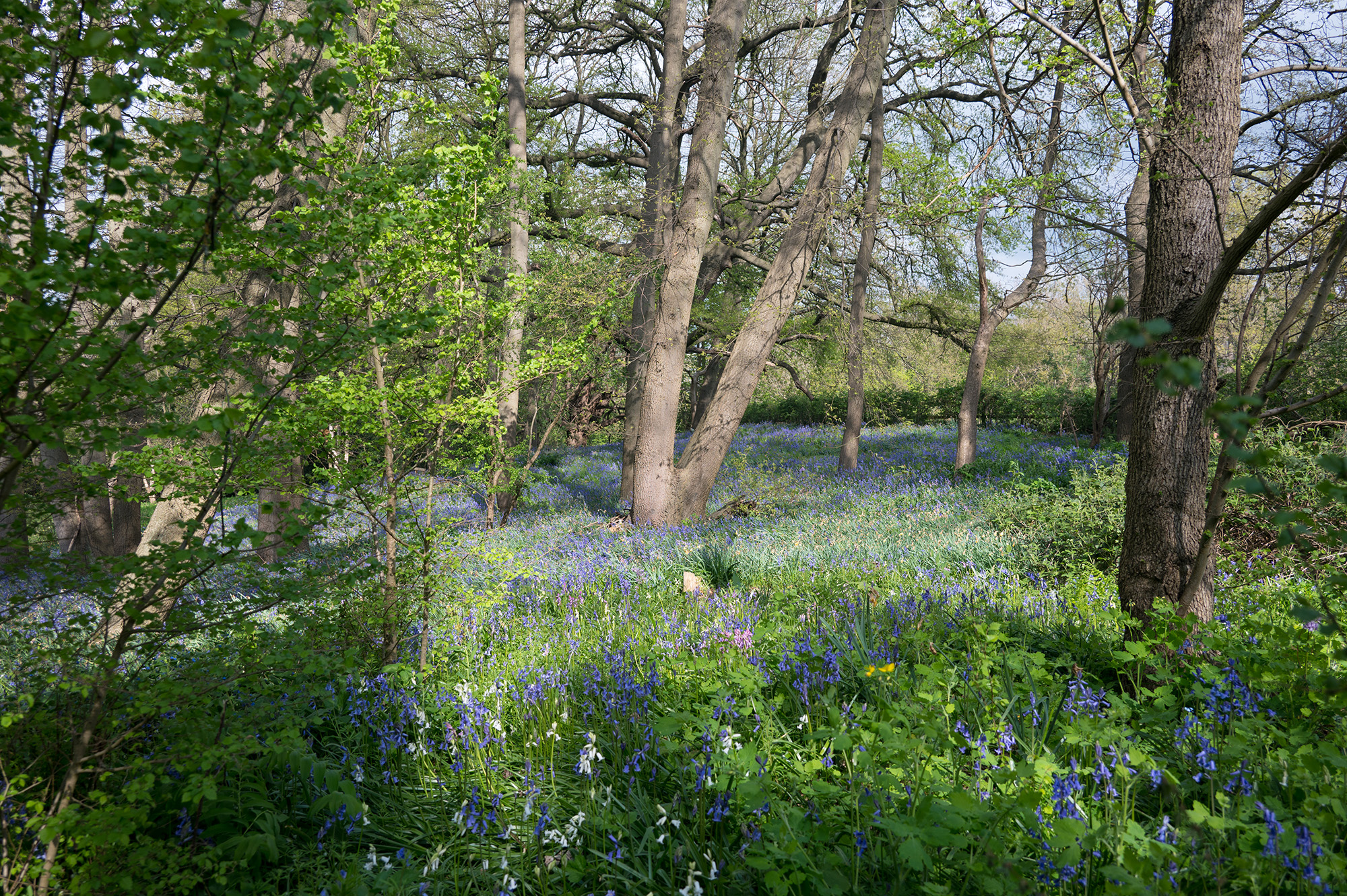
My favourite bluebell woods are those in Warley Place, Warley, Essex. I’ve done a previous post about the history of what was once a beautiful estate with my mascot, Reg, here and you can read more here on the Essex Wildlife Trust website. At different times of the year, I return to see the snowdrops, daffodils, bluebells or just to wander in the woods. Sadly, much of what remained of the grand house and conservatory is now overgrown and if it weren’t for the signs, parts of it would be easy to miss.
The house was demolished in the 1930s but several years ago, it was possible to look down to see the white-tiled walls of the cellar. Now, they’re overgrown. At one time, one could go into the ruins of the conservatory but now they are fenced off because they’re unsafe.
However, the bluebells are as glorious as ever.
Woodland scene with bluebells at Warley Place
At this time of year, I often think of a poem about bluebells. That’s rather strange for me because I don’t remember poems easily and this one isn’t one I set out to learn, it sort of drilled its way into my brain! Neither is it a rhyme from my childhood – rather one that was in a Ladybird book that I used to read to my son when he was small. I did a Google search on what I can remember but I didn’t get any results. Perhaps you can tell me if I’ve forgotten a verse.
This is what I remember:
The month of May is bluebell time And under woodland trees, Small bells of blue on long, straight stems Are swaying in the breeze.
My mummy says they’re wildflowers, From little bulbs they grow. I think the fairies put them there A long, long time ago.
Last night I heard the bluebells ring I heard their distant chimes. Last night I heard the fairies sing Of long forgotten times.
Sadly, I don’t think my son was particularly bothered about the poem as he can’t remember it but both husband and son remember the final verse because they had their own version. It neither scans nor rhymes but it caused great merriment back then!
Last night I heard the bluebells ring I heard their distant chimes. I wish they’d stop their ringing They’re getting on my nerves.
Do you remember the Ladybird book that contained that poem? Or indeed the poem itself?
The Foundling Hospital Museum, 40, Brunswick Square, London
The Foundling Hospital Museum.
An unusual thing that happened to me during the pandemic is that although I live in the UK, I joined a book club in Hawaii. The meetings are held once a month on video conferencing software, Jitsi. As well as discussing the current month’s book, it has been fascinating for me to meet new people and to find out what life has been like in Hawaii during the pandemic. I’ve certainly read books that I’d never have picked up before, and thoroughly enjoyed them.
In May, it’s my choice of book and I’ve chosen ‘The Foundling’ by Stacey Halls. From Stacey Hall’s website here
London, 1754. Six years after leaving her illegitimate daughter Clara at London’s Foundling Hospital, Bess Bright returns to reclaim the child she has never known. Dreading the worst – that Clara has died in care – the last thing she expects to hear is that her daughter has already been reclaimed – by her. Her life is turned upside down as she tries to find out who has taken her little girl – and why. Less than a mile from Bess’ lodgings in the city, in a quiet, gloomy townhouse on the edge of London, a young widow has not left the house in a decade. When her close friend – an ambitious young doctor at the Foundling Hospital – persuades her to hire a nursemaid for her daughter, she is hesitant to welcome someone new into her home and her life. But her past is threatening to catch up with her and tear her carefully constructed world apart. Note for readers: in the USA, ‘The Foundling’ is published under the title ‘The Lost Orphan‘
My friends in Hawaii had a bit of trouble finding the book and I’ve only just realised why when I read the final part of the description from Stacey Hall’s blurb. It’s not called ‘The Foundling’ in the US, it’s called ‘The Lost Orphan’! If only we’d all realised that before!
I’ve been fascinated with the history of the Foundling Hospital (find out more here) for some time and when I came across ‘The Foundling’, I couldn’t resist reading it. I wasn’t disappointed and it whetted my appetite for more information. So, a few weeks ago, I went to the Foundling Museum Hospital in London.
I’d once written a story which featured a foundling from the Foundling Hospital which was accepted by Gill James for her anthology ‘Baubles’, available here. I’d become very interested in the tokens that were the method used to identify children placed in the care of the Hospital. On admission, a ‘billet’ or form was completed, recording the gender, clothing, date and hour of admission, appearance of the baby including identifiable marks, and their Hospital number. These were folded into an envelope, and sealed with the token inside. The mother kept the other token and if she was ever able to reclaim her child, she would present her token which would be matched to the one in the Hospital records. In my story written for the ‘Baubles’ anthology, I imagined two Christmas tree baubles being used – one left with the billet and the other remained with the mother.
Display of Hospital Tokens
Real tokens were an eclectic collection as you can see above, from items of jewellery such as rings or bracelets to a hazelnut pierced so it could be threaded on a string, a playing card, an engraved padlock, coins and pieces of fabric. As soon as a baby was left in the Hospital, he or she was given a Hospital admission number which was worn around the baby’s neck at all times. Each child was also given a new name and baptised the following Sunday, then sent to be wet-nursed in the country. The admission number was the only identifying factor linking that child to their billet.
At the age of five, children were taken back from their foster family into the Hospital where they were educated. They learnt to read so they could study the Bible as well as learning practical skills like spinning, weaving and needlework. Initially the children weren’t taught to write as it was considered this might give them ‘ideas above their station’, however, a new, pioneering teacher joined the Hospital and from 1757, the children were taught to write. The founder of the Hospital, Thomas Coram, ensured that girls received a high standard of education, even including book-keeping. By the mid-nineteenth century, boys and girls were taught reading, writing, grammar, mathematics and geography.
At about the age of ten, children were apprenticed, to teach them a trade, although from 1806 apprenticeships began at the age of fourteen. Typically, boys followed careers in the military, maritime services and trade (except public houses). Most of the girls became domestic servants.
In 1926, the children were moved to a purpose-built school in Berkhamsted, Hertfordshire and the Hospital was demolished. On the north-west corner of the Hospital’s original site, the London Headquarters were built and opened in 1938. Today, that building houses the museum. Several of the rooms in the museum are accurate reconstructions of some of the original Hospital interiors such as the Committee Room and the Court Room, see photo below of the Court Room and a drawing of the original in the Hospital building.
The Court Room
Drawing of the Court Room
By 1954, all the children had been found foster homes as more emphasis was placed on family care rather than public provision for children. Today, the charity, Coram, is one of the foremost voluntary adoption agencies in the UK. From its original London site, the Coram group of charities continues to create better chances for children, supporting hundreds of thousands of children and parents every year – find out more here
The museum is well worth a visit if you’re in London, especially if you’re an art lover as there are many paintings on display. The Foundling Hospital benefited greatly from Thomas Coram’s friends and supporters, many of whom were wealthy and well connected as well as some of the leading artists of the day. Principal among those supporters were the painter and engraver, William Hogarth (1697-17641) and the composer George Frideric Handel (1685-1759).
Hogarth was an active governor and he donated the first artwork to the Hospital – a portrait of Thomas Coram – and he encouraged all the leading artists of the day to follow suit. The Hospital became England’s first public art gallery.
Have you visited the museum? What did you think?
2 responses to “The Foundling Hospital Museum”
Joanne Ashworth
We visited the museum a couple of weeks ago. My 5th great grandfather was a foundling left in 1757 and I loved being at the museum seeing all the beautiful artwork and being where my ancestor had started out his life. My dad and I have researched for 30 years and found out about his life but would love to know the circumstances surrounding his birth. Grateful for those benefactors and especially Thomas Coram for their dedication and charity
Hi Joanne, How amazing! I imagine you have contacted the hospital about your ancestor? I contacted them for details for my book and they were so helpful. They were first class!
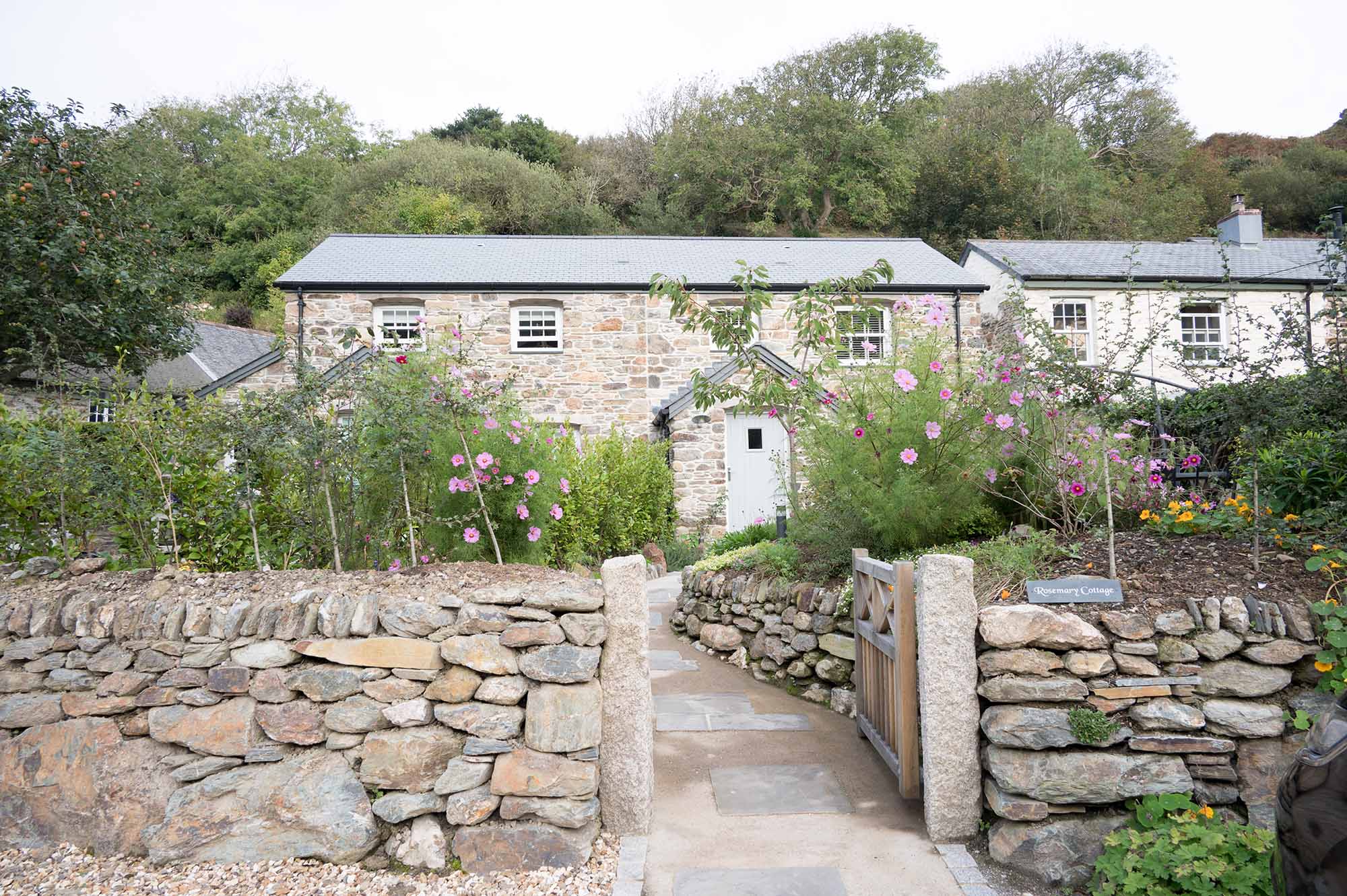
In my last post – ‘Place, as a Writing Inspiration’, I told you about being let down with our Scottish cottage, (read about it here) so, after a mad scramble to rent another cottage, we set off for Cornwall! A case of ‘Outlander’ to ‘Poldark’! We managed to find a traditional-looking stone cottage in St Agnes, just a minute’s walk from the sea. From the outside, the cottage appeared to be old, so we were really surprised at how new and modern it was. Of course, we’d seen the photos of the interior when we booked, but the reality far outdid the images.
Cottage in St Agnes
When we arrived, the owners of the cottage greeted us and told us a little of the history of the house. There had been two cottages on the site which had both been completely demolished and two new cottages built in their place. They’d been built in a traditional style so they looked in keeping with the other houses along the road road, but inside they were very modern and, of course, brand new. The bedrooms were downstairs, while the kitchen, dining and living areas were upstairs. There was a book on display in the entrance hall, showing the original cottages and the various stages during the demolition and the rebuilding of the new ones. The owners were currently living in a cottage next door and were renovating that. And strangely one of them had once worked about a mile from where we currently live. Small world!
I first encountered the ‘Poldark’ series by Winston Graham, (read about Winston Graham and his writing here)during my teens and I fell in love with the characters, the era and the wild Cornish landscapes that Graham described. Like many others, I watched the TV series of ‘Poldark’ during the 1970s starring Robin Ellis and Angharad Rees as Ross and Demelza and then again, in 2015, when Aidan Turner and Eleanor Tomlinson played the same characters. I don’t often reread books and the ‘Poldark’ series of books is the only series that I have ever read more than once! So, to have been in Cornwall was a treat indeed!
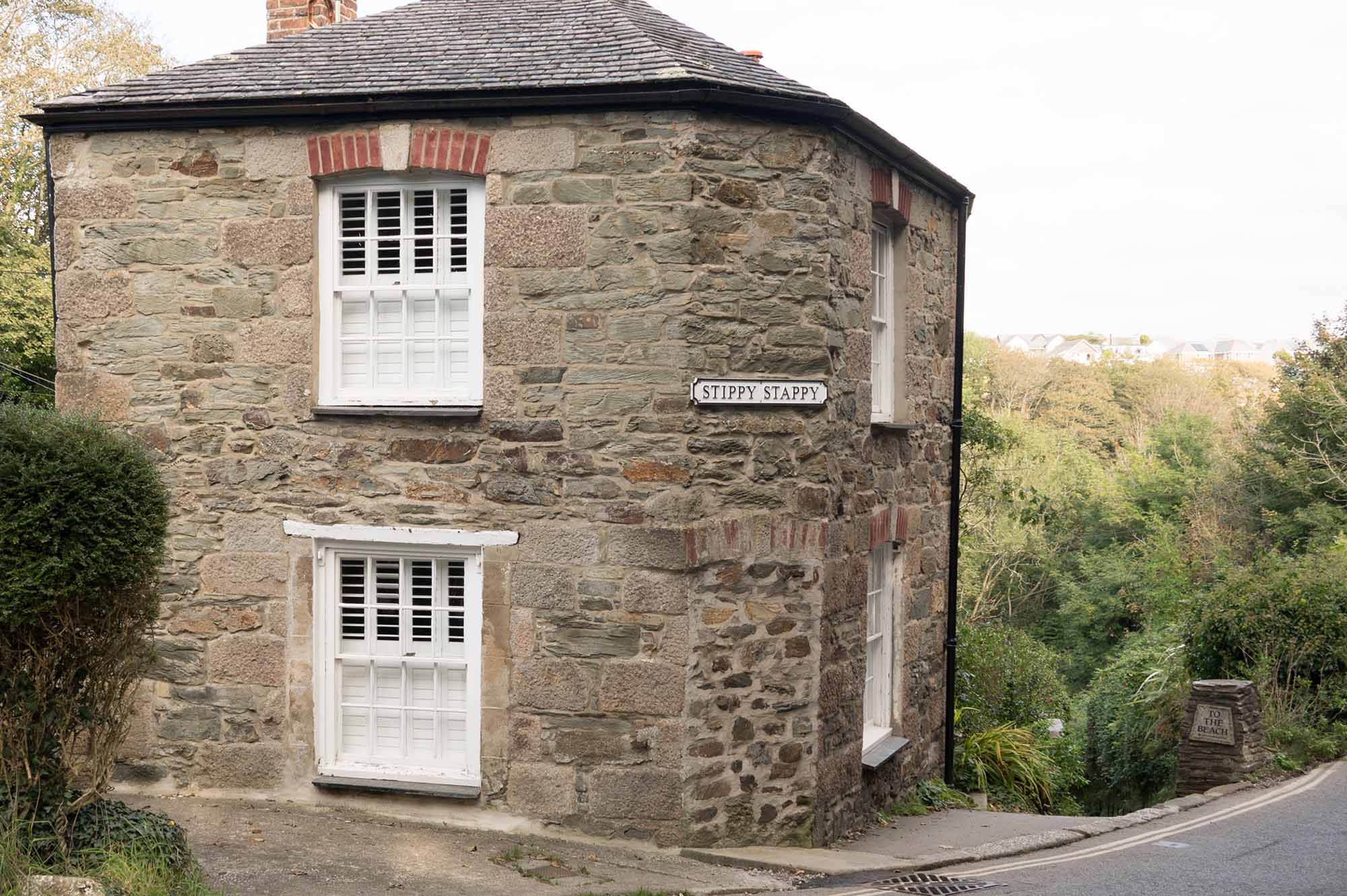
During our week, I was amazed at how many reminders they were of the ‘Poldark’ books. A mere minute’s walk from the cottage took us to Trevaunance Cove (remember Sir John Trevaunance and his younger brother Unwin?) We passed a sign to a to the hamlet of Warleggan near Bodmin Moor (who can forget George Warleggan?) And do you remember Stippy Stappy Lane, near the church at Sawle, which featured in the Poldark books? According to the Pan Macmillan website, St Agnes was supposed to have been part of the inspiration for Sawle, the village in Graham’s books (read about it here). It’s not easy to see from the photo but just to the right of the house, is the entrance to the extremely steep Stippy Stappy, along which there is a row of terraced cottages. I bet the sight of those makes any furniture delivery man’s heart sink!
Stippy Stappy in St Agnes straight out of ‘Poldark’!
If you visit Saint Agnes, make sure you save time to go into the museum. The building didn’t look as though it could house many exhibits, but once inside, we discovered there was plenty to see and I was fascinated by the virtual reality headset. It allowed visitors to experience the harbour that had once been in Trevaunance Cove, with boats bobbing on the water and people moving about, almost as if one was actually there.
The only thing missing from my ‘Poldark’ week was Aidan Turner himself! Perhaps another time…
Vange Well No. 5 my writing inspiration for ‘A Touch of the Exotic’
If you’re a writer – or even if you aren’t – have you ever been somewhere so remarkable that you feel it deserves its own story? One such place that gave me writing inspiration is Vange Well No.5. Yes, it really is called that! You can read about that place inspiring my story ‘A Touch of the Exotic’ here and more information about the well here.
Last year my family decided to spend a week in Scotland and I was hoping for plenty of writing inspiration for new books. I’d only been to Scotland once for a university field trip and although I had other things on my mind then, the beauty of the rugged Highland landscape struck me and remained with me. So, a week spent near Loch Ness sounded perfect. We decided to rent a cottage for a week and found an old farmhouse somewhere that seemed conveniently situated close enough to Inverness but still fairly remote.
However, two nights before we were due to leave, the owner of the farmhouse had to cancel our booking and it looked like our week was over before it had begun.
We tried desperately to find another place to stay but it was half term in Scotland and everywhere was booked. One particular property that caught my eye was on the other side of Loch Ness to where we’d originally planned to go and the reason it stayed in my mind above all the other properties we looked at online, was that it had its own mausoleum. And not just any mausoleum. It is the final resting place of Simon Fraser of Lovat, also known as the Old Fox and if you, like me, are a fan of Outlander by Diana Gabaldon, (see her website here,) then, you’ll know that the Old Fox was portrayed as the grandfather of Jamie Fraser (played by Sam Heughan).
As well as a mausoleum, of course, there was a house in which to stay! The three-storey building dates from 1776 and formerly used as a manse. It boasts a king-size four poster bed and in the garden, a gigantic cedar tree that is older than the house with a resident family of red squirrels. And apparently, as well as many modern amenities, the house still has service call bells!
I say ‘apparently’ because I didn’t actually get there to see it because the house, like most of the other places for rent during that week, was booked. So, my dream of wandering along the lane to visit the mausoleum in the footsteps of Diana Gabaldon and many of the cast of ‘Outlander’, didn’t come true.
A shame? Well, luckily, not really because we actually managed to find a cottage for the week. It just wasn’t in Scotland. No, we went as far from Scotland as it’s possible to go…
So, I never got to be inspired to write a story by soaking up the atmosphere in that particular house and its mausoleum. But in the next part, I’ll tell you about where we actually ended up for the week…
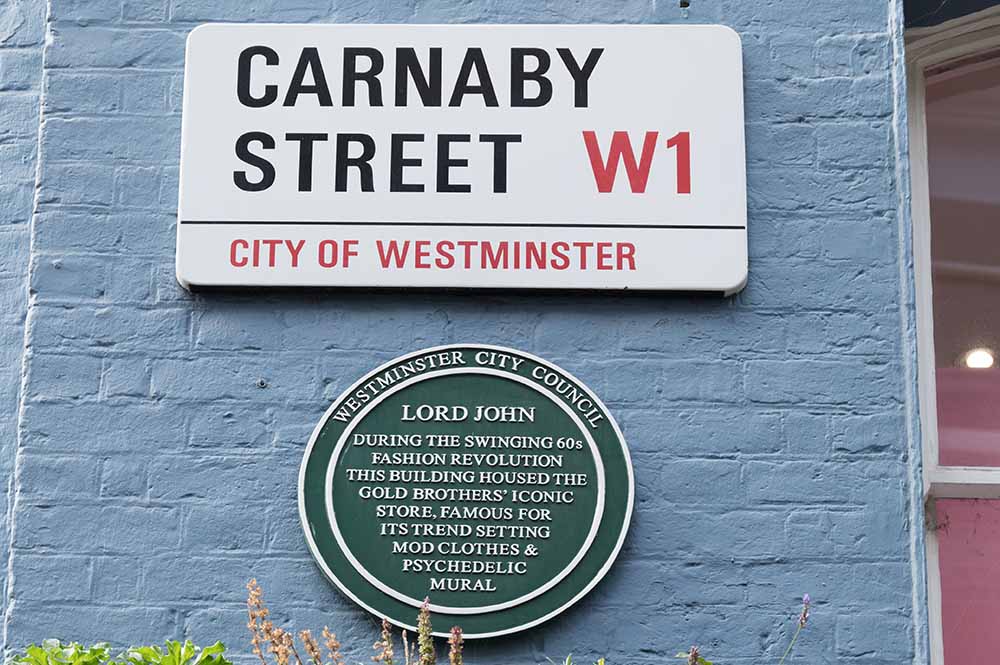
After passing what had once been an early 18th Century Great Plague mass burial pit in Marshall Street and spotting the site where William Blake had been born in 1757, I found myself in a street I associate more with the swinging sixties than the Regency period – Carnaby Street.
Carnaby Street sign
So, what has the street most famous for the latest fashion in the sixties to do with the 18th Century? Well, apparently, the northern end housed Huguenot refugees in the 17th Century and it remained a quarter for shopkeepers and tradesmen into the 19th Century. I wonder what they’d have made of psychedelia!
At the end of Carnaby Street, I turned into Beak Street which was formerly Silver Street. Later, I wondered why anyone would change the name of a street from the perfectly acceptable ‘Silver’ to the rather odd ‘Beak’. Wikipedia told me that the street was renamed after “Thomas Beake, later one of the Queen’s messengers, who, in the late 17th century, obtained the land on the north side, between Regent and Kingly streets. The name Beak Street first appeared in the ratebooks for 1689, and in 1691 it was ordered that the street be paved with stone.” (From Wikipedia here) From that article on Wikipedia, I also noticed that Antonio Canaletto lived at number 41 between 1749 and 1752.
After walking along Beak Street and through surrounding roads, I saw many original 18th Century shop fronts and peered in through the bars of a gate where I should have seen late 19th Century stables with ramps and carriage houses but in fact, I couldn’t make much out at all and had to accept they’d once been there.
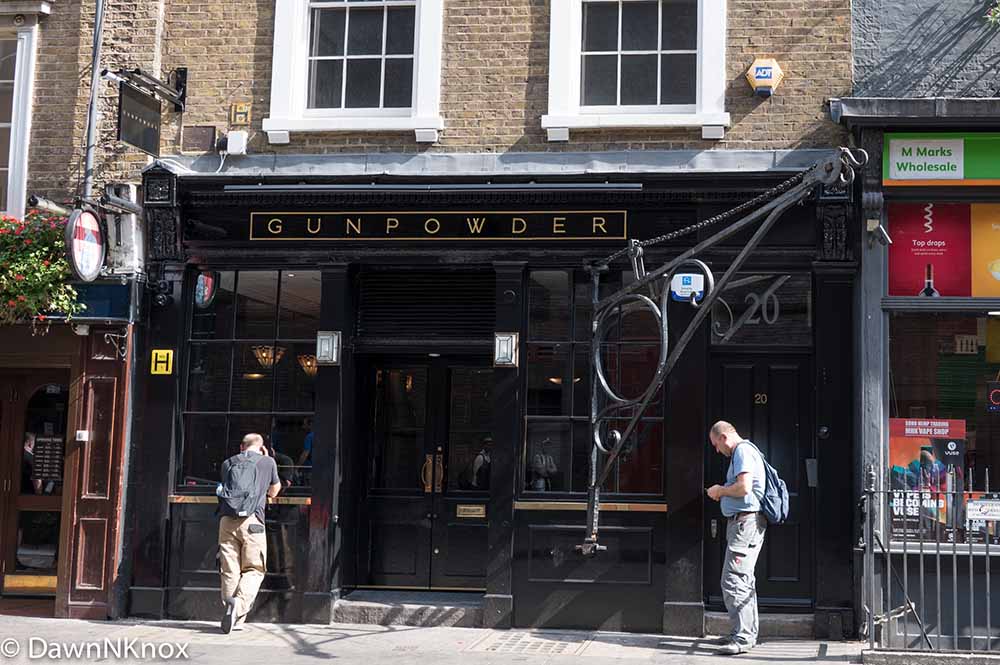
There were more 18th Century shop fronts in Greek Street, and one of them, No. 20 still had the original iron hoist.
Iron hoist on shop
Louise Allen says the property was originally a colourman’s shop. I thought colourmen provided paints and pigments to artists and a search turned up this detailed website The Regency Redingote with lots of interesting facts about colourmen. I’m still not clear why such a large hoist would have been necessary though!
Nearby, in the same street, notable residents included Casanova in 1764 and Thomas de Quincy, author of ‘Confessions of an Opium Eater’.
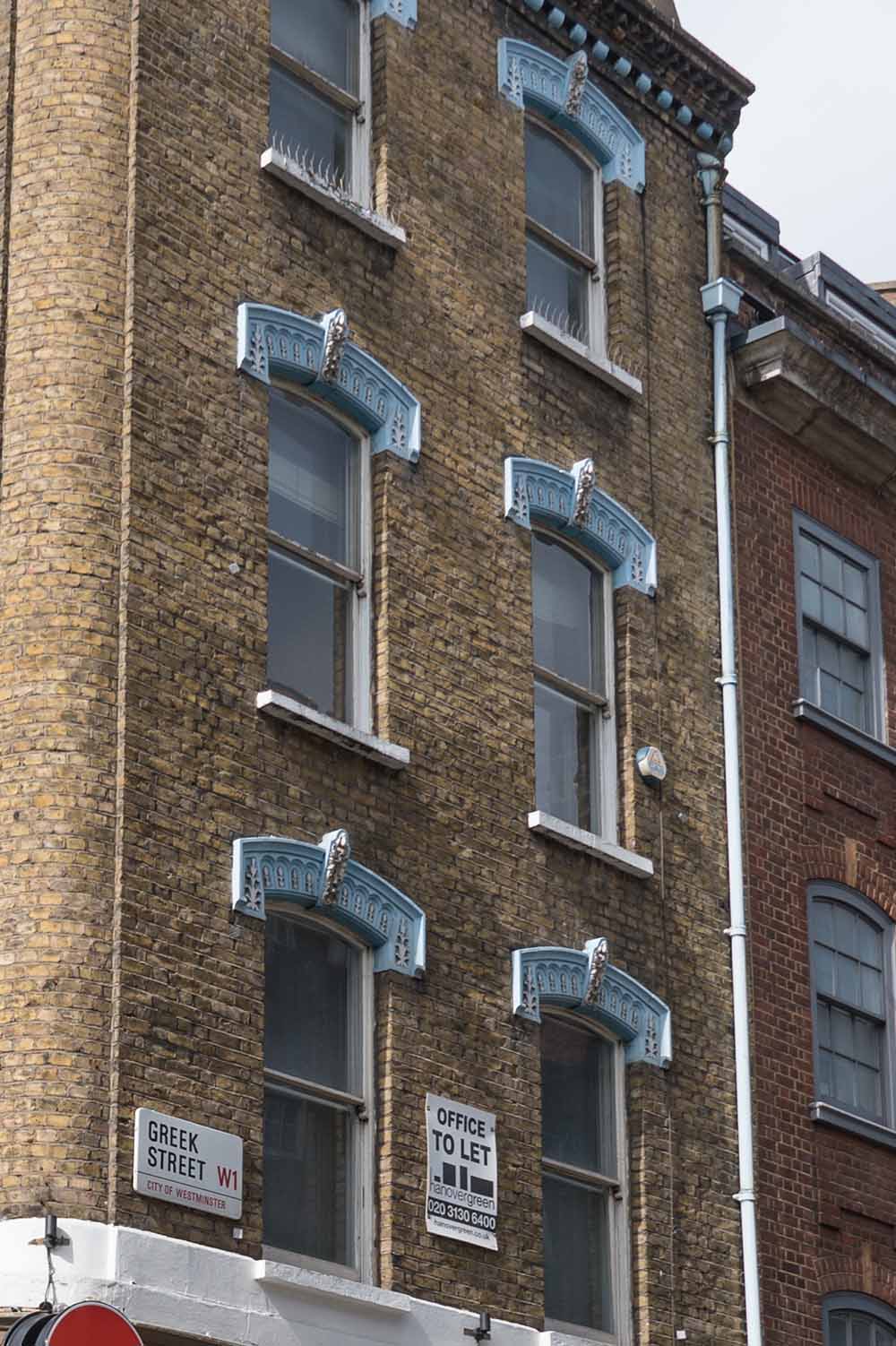
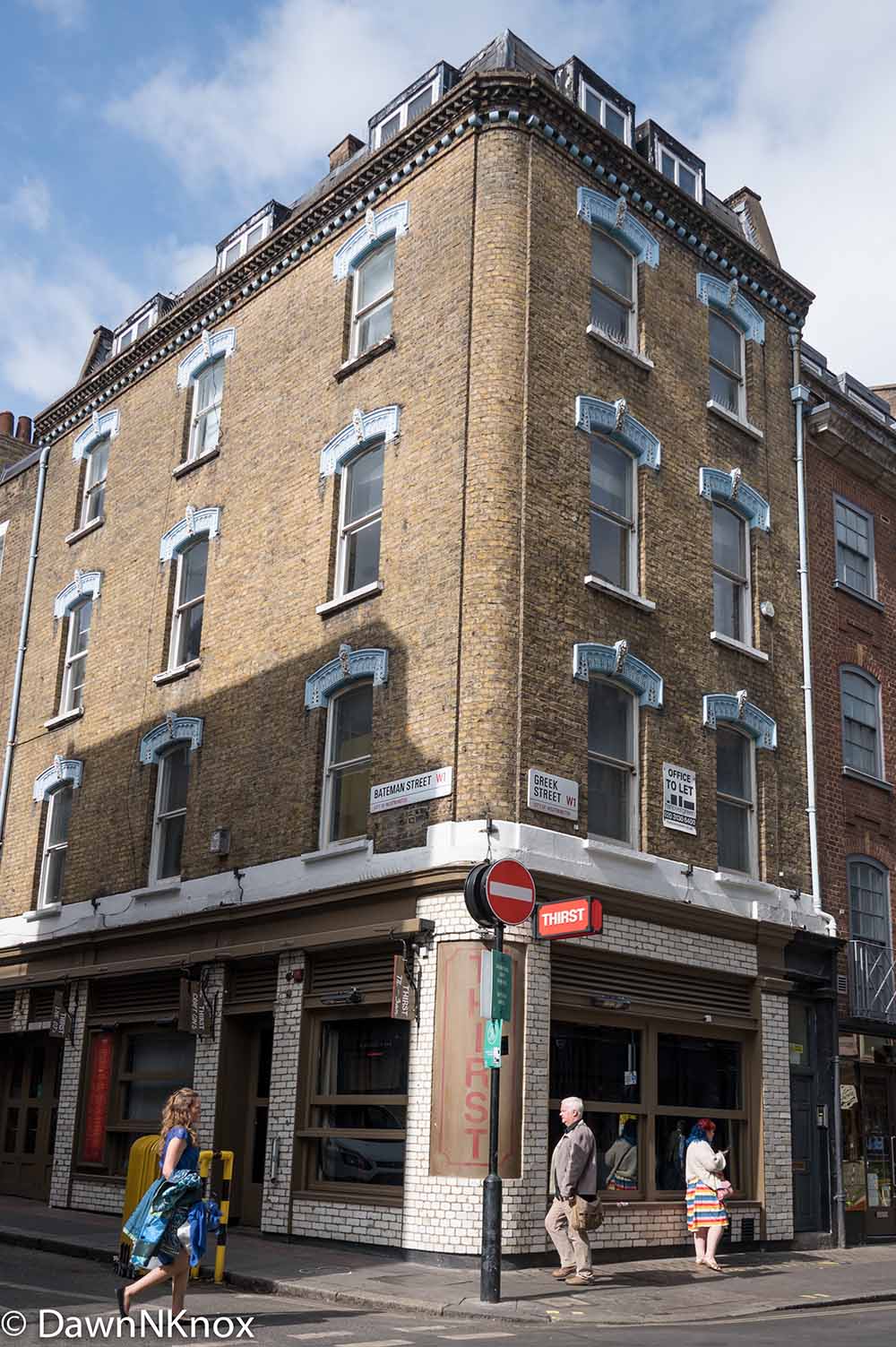
It took me a while to find the next point of interest which is called Wedgwood Mews. I was looking for a sign but never actually found one. However, the realisation dawned on me when I noticed the windows of the building!
Wedgwood Mews, Soho
Wedgwood Mews, Soho
Wedgwood Mews, once Josiah Wedgwood’s showrooms from 1774 to 1795.
Each window is topped with what looks like Wedgwood decoration and apparently, this was once Josiah Wedgwood’s showrooms from 1774 to 1795 until he moved to St James’s Square.
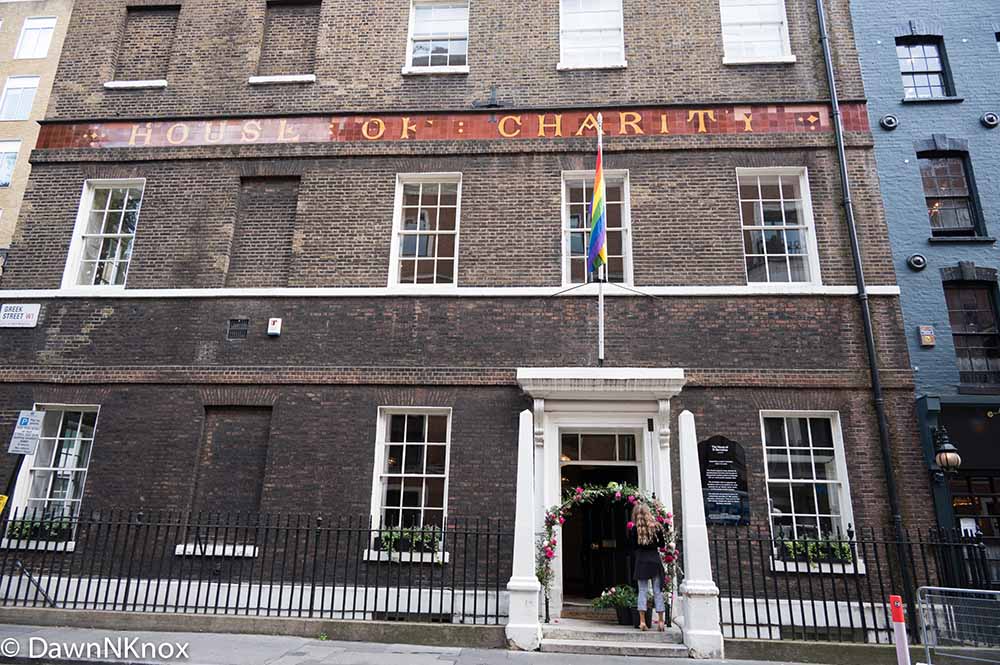
At the end of Greek Street, where it meets Soho Square, I came across this handsome building – St Barnabus House.
St Barnabus House, Soho
Apparently, it once belonged to Richard Beckford, a Jamaica sugar magnate but is now a charity to help those who have experienced homelessness. Once known as the ‘House of Charity’ (as indicated at the top), it’s now called ‘St Barnabus House’. Research suggests that the rooms and gardens of the House of St Barnabas were the blueprint for the imagined lodgings of Dr. Manette and Lucy in the novel, ‘A Tale of Two Cities’, by Charles Dickens, published in 1859. My next stop was the Pillar of Hercules pub in Greek Street, alongside which is a tiny alley, leading to Manette Street, named after the character in Dicken’s novel. Unfortunately so much building work was going on, it was hard to see the building I was looking for – the late 18th Century St Anne’s parish Workhouse next to the chapel. There wasn’t enough space to move back far enough to take the whole building in.
It was amazing on that short walk around south Soho that I recognised so many names of former residents from the Regency period and other times, such as John Constable who lived in Frith Street from 1810 to 1811, and in more modern times, Peter Cook, famous satirist and comedic actor, who often worked with Dudley Moore. Another Regency resident was William Hazlitt in 1830 who was an essayist, drama and literary critic, painter, social commentator, and philosopher. I must admit to not knowing much about William Hazlitt, so I looked him up and found some of his quotes.
Prejudice is the child of ignorance.
The more we do, the more we can do; the more busy we are, the more leisure we have.
A wise man indeed. Had I known more about him before, I could have visited his grave in St Anne’s Church which was also one of my stopping points. But never mind, because I shall definitely return to do that walk again and perhaps to carry on and do the next tour in the book ‘Walks Through Regency London’ by Louise Allen, which is in south Soho. Hopefully, it won’t be long before I can get back to London…
If you want to see all the photos I took on the day, you can see them here on Flickr
Continuing with my Regency walking tour around North Soho, based on the book ‘Walks Through Regency London’ by Louise Allen, I resume where I left off, in Poland Street, which is a turning off Oxford Street.
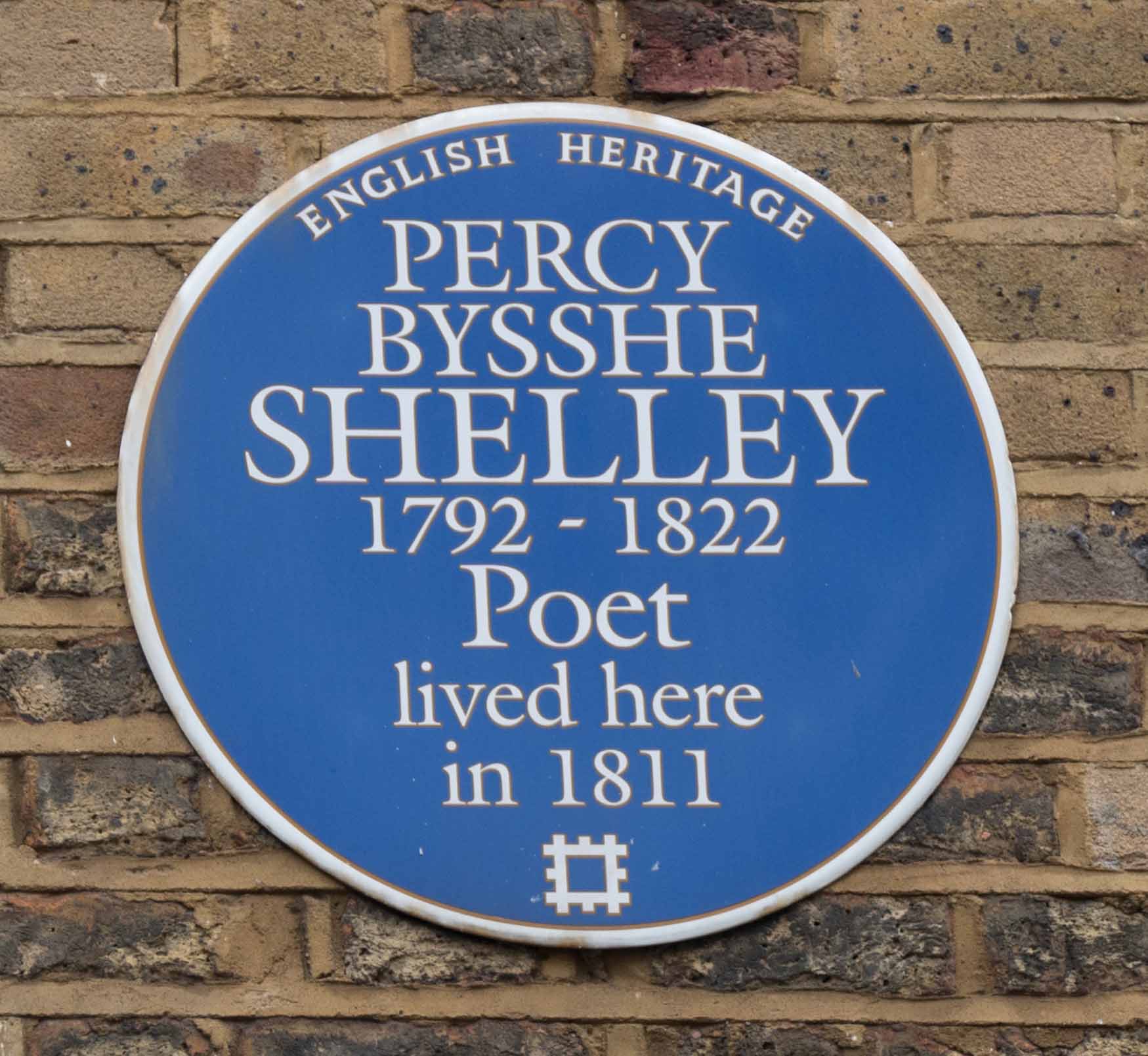
My next stop was at a house where Percy Bysshe Shelley lived in 1811.
Percy Bysshe Shelley blue plaque
Shelley’s house
Further along the street was no 54, the house of singer, Elizabeth Billington, who was also apparently known as the ‘Poland Street Mantrap’! Perhaps because she was the mistress of the Duke of Rutland, the Prince of Wales, his brother the Duke of Sussex, the theatre manager, Richard Daly amongst others! A busy lady! But she was also very popular with audiences for her singing and she was in demand by both the managers of Drury Lane and Covent Garden who begged her to appear at their respective theatres. They eventually agreed that she would sing at each venue alternately for a salary of 3,000 guineas.
Near Mrs Billington’s house was the 19th Century Star and Garter pub but unfortunately, it was covered in scaffolding and there was a rather large van parked in front of it. Consequently, the photo I took showed very little of the pub. I carried on to the end of Poland Street and turned left into Broadwick Street as instructed.
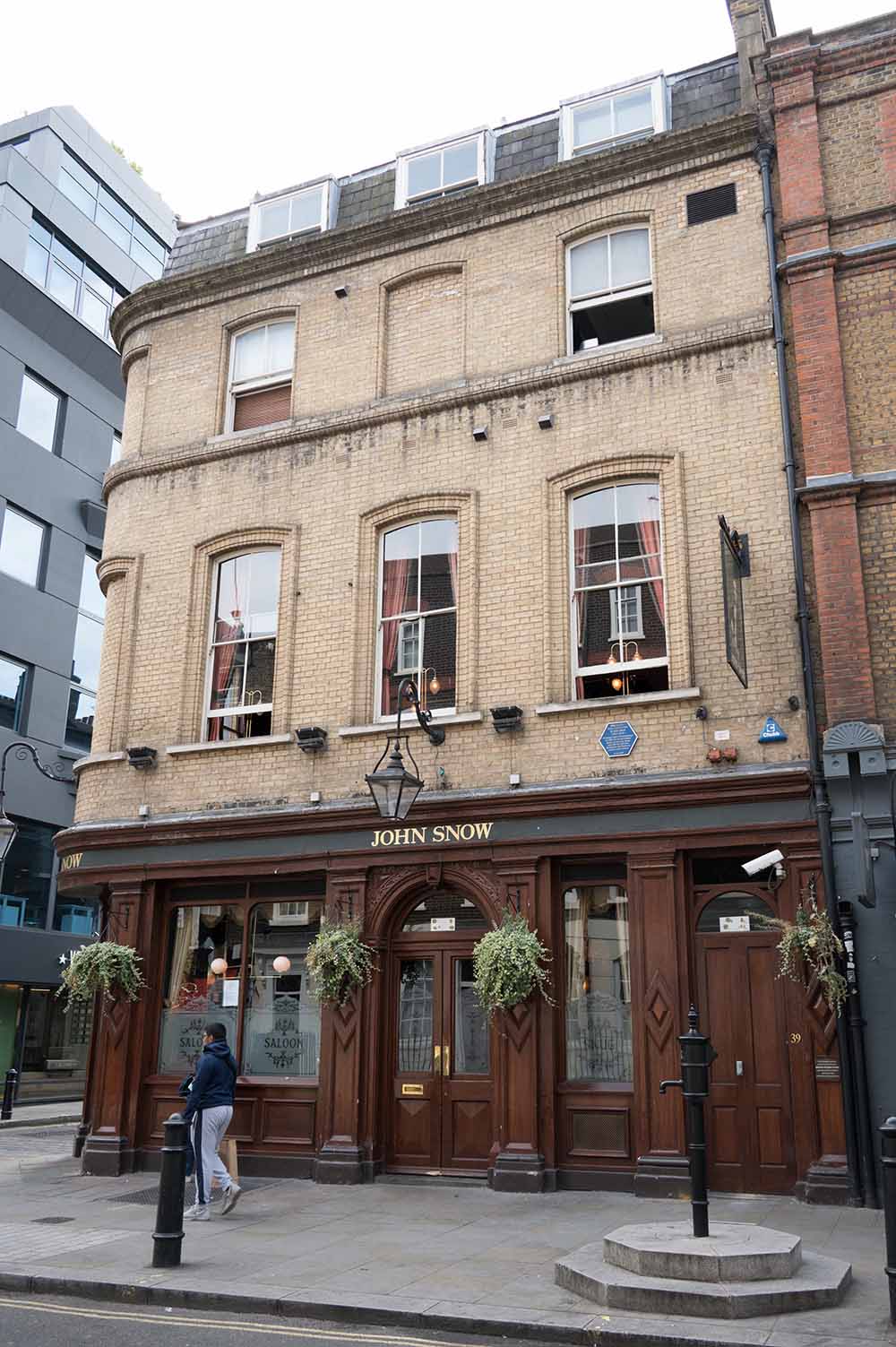
I then spent some time wandering about looking for a pump. Thank goodness for smart phones and the Internet as I looked up the pump and discovered it had been moved. I should have turned right into Broadwick Street. Once I retraced my steps, the pump was really obvious and in a very appropriate position because it was outside the John Snow pub.
The John Snow pub with pump outside.
This is appropriate because although slightly later than the Regency period, Dr John Snow (1813-1858) is remembered for being the first to link an outbreak of Cholera in August 1854 in Soho to the water from the pump. Dr Snow was an anaesthetist who lived near Broad Street (as Broadwick Street was once known) and having once studied Cholera in an epidemic in South London, he’d developed a theory that it was caused by polluted water. He recognised that Cholera cases were clustered around the water pump and succeeded in demonstrating it was the cause of the epidemic. Initially, his theory was met with disbelief but he finally convinced the parish council to remove the pump handle in September 1854, thus preventing the pump’s use and stopping the spread of the disease.
After that, I carried on the tour and found myself somewhere I associate more with the swinging sixties than the 18th Century… next time…
Carrying on with my Regency walking tour using information from the book ‘Walks Through Regency London’, by Louise Allen, I left Berners Street (see here for previous post about the hoax that may or may not have taken place there.)
The instructions were to cross to the south side of Oxford Street. For anyone, like me, who doesn’t carry a compass and who is walking along Oxford Street in overcast weather, you’ll find the south pavement is the opposite side to Berners Street. I must admit when I read the details that told me the building I was looking for currently housed Marks & Spencer, I thought it was the other store in the opposite direction (towards Marble Arch) and on the opposite side of the road (presumably the north side) and I thought that since it was only a building on the site of what had once been the Pantheon, I might not have time to do it.
However, as I walked towards Poland Street, having made up my mind to skip the Pantheon, I realised I was passing another Marks & Spencer store. I wondered if perhaps this was the correct building – so took a photograph in case. Indeed, when I got home and checked, I discovered this is the site of the original Pantheon, built in 1772. Photos I found on the Internet of this current building, show the words ‘The Pantheon’ at the top but as you can see on my photo, they are no longer there.
So, what was the Pantheon? Well, it was a grand building erected for masquerades, assemblies, exhibitions and concerts. The author of ‘Walks Through Regency London’ says that it also hosted scandalous Cyprians’ (Courtesans’) balls, however, so far, I haven’t been able to find any other evidence supporting that. The main rotunda was one of the largest rooms built in England up to that time and had a central dome somewhat reminiscent of the celebrated Pantheon in Rome – hence the name.
After a fire in 1792, it was rebuilt and in 1813, it became the English Opera House before it was closed by the Lord Chamberlain. In 1833, it was turned into the Pantheon Bazaar with stalls in the main hall and upper gallery. There was also an oriental-style conservatory in which one could buy flowers, exotic plants and animals such as love birds, monkeys, mice and squirrels. In 1867, the building was acquired by W and A Gilbey, wine merchants who used it as offices and showrooms until they sold it to developers in the 1930s. It was finally demolished in 1937 and now, the building with the Grade II listed black ‘ebony’ granite facade belongs to Marks & Spencer.
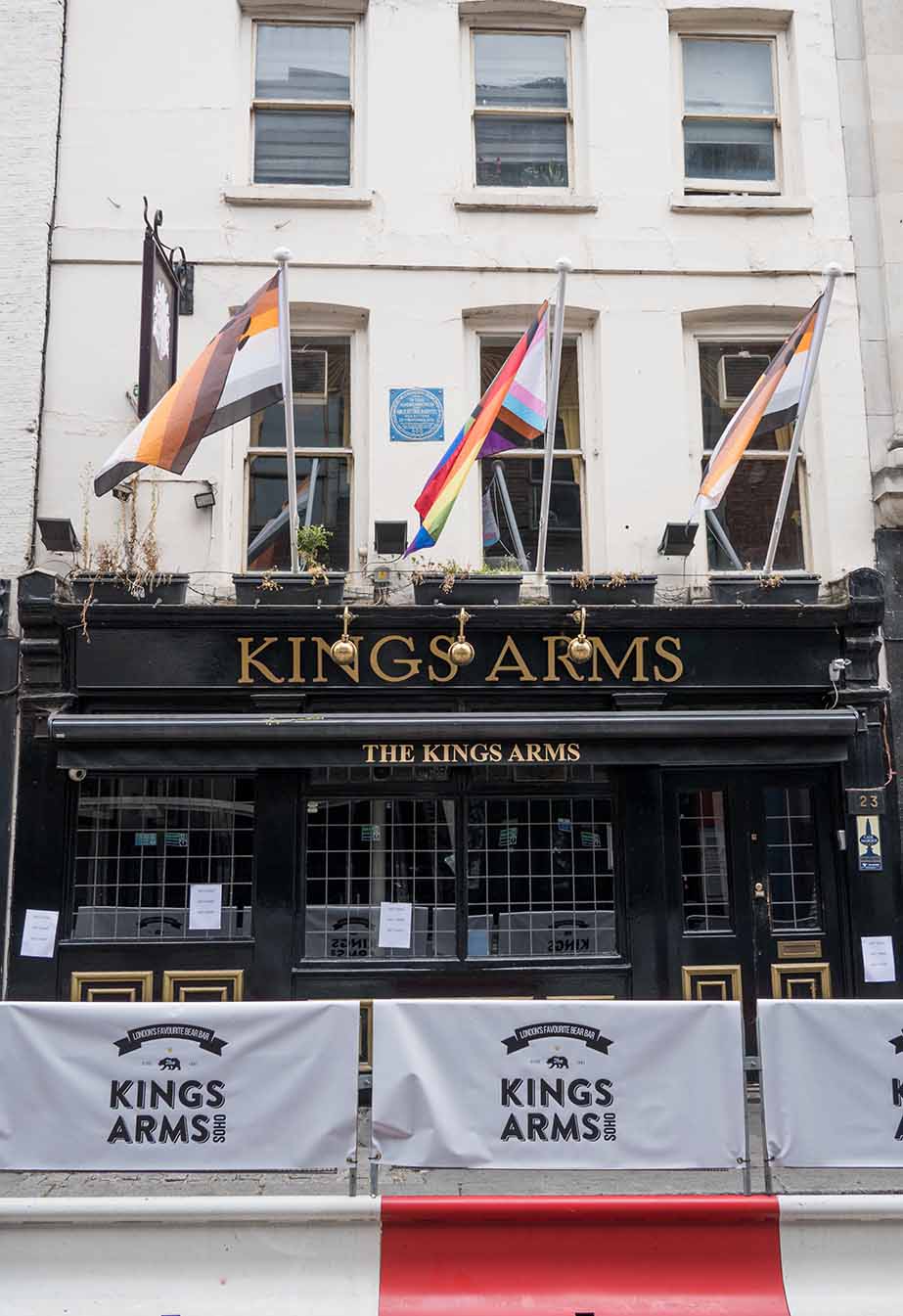
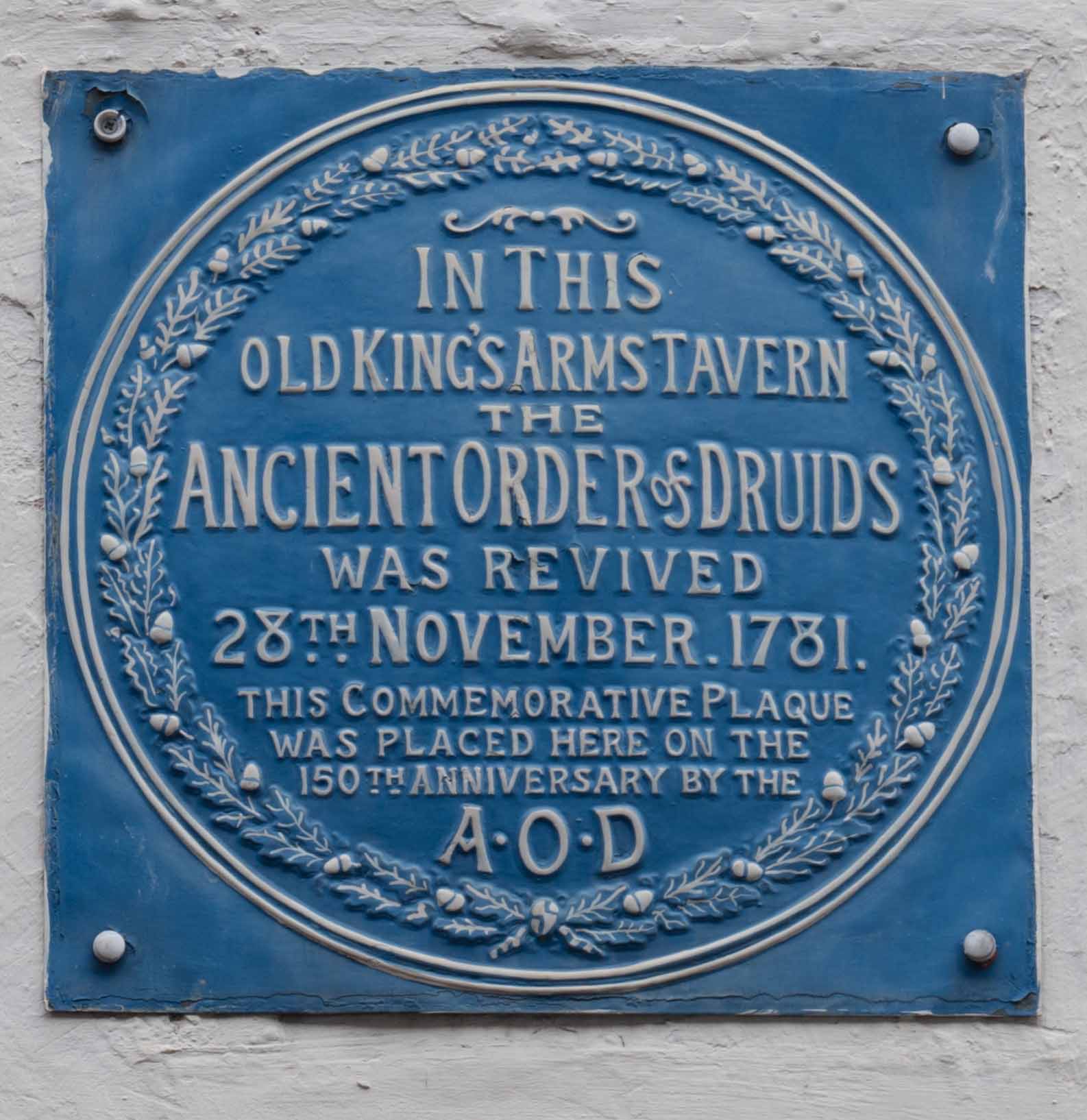
So, what about the Druids? Well, that was the next part of the tour. Still on the south side of Oxford Street, I carried on and turned into Poland Street where I found the King’s Arms pub,
The King’s Arms, Poland StBlue Plaque for Ancient Order of the Druids
The pub’s claim to fame is that it is the site of the reformation of the Ancient Order of Druids. I looked up the Ancient Order of Druids and found this on the British Museum website here:
The Ancient Order of Druids was founded in London in 1781 by a man named ‘Hurle’, about whom little beyond this is known. The AOD was a fraternal society, modelled on the Freemasons. Interest in the ancient (pre-Roman) druids had been sparked from the early 1700s by the writings of antiquarians such as John Toland and William Stukeley. Drawing on these writings about ancient druids, Hurle constructed an elaborate legend that traced the origins of the AOD back to a fictional ‘Togo Dubellinus’, the son of a Druid priestess, in the first century AD. The AOD rapidly spread beyond London and developed a national and provincial structure and hierarchy. The founding lodge, of which Hurle was a member, became the ‘Grand Lodge’ with power over the rest of the order. there were also provincial ‘Grand Lodges’. In 1833, part of the order split off to become a government-registered friendly society, the ‘United Ancient Order of Druids.’ The AOD continued unregulated, as a purely fraternal society, under its original name. Both the AOD and the UAOD still exist today.
After that, I continued along Poland Street on my Regency tour but more of that in another blog…
I recently bought a book called ‘Walks Through Regency London’, by Louise Allen and for my first trip to London since the initial lockdown in March 2020, I decided to do one of the self-guided walks – Walk 5 Soho North. I started at Tottenham Court Road and walked along Oxford Street until I came to Berners Street. Unfortunately, no Regency buildings remain in this street but I decided to stroll along it anyway.
In 1812 until 1816, Samuel Taylor Coleridge was a resident of number 71 but of course, there was no evidence of this.
However, apparently, the street is best known for the Berners Street Hoax which some people believe is actually a hoax in itself! Mr Theodore Hook made a bet with his friend, Samuel Beazley, that he could make an ordinary house into one of the most famous in England – and he selected number 54 Berners Street. This was supposedly the house of a lady called Mrs Tottenham. Hook sent out thousands of letters and orders on behalf of the unsuspecting Mrs Tottenham and on a particular date in November (sources vary as to the actual day but my guide gave 27th November 1810) tradesmen and delivery men began to arrive, beginning with the chimneysweeps. Deliveries included coal, coffins, furniture, linens, jewellery and a piano, amongst other items and poor Mrs Tottenham also received visits from numerous dignitaries, including the Lord Mayor, the Governor of the Bank of England, the Archbishop of Canterbury and even minor royalty. The result, was utter chaos.
A super story but one that may owe more to someone’s imagination than actual truth. But who knows, perhaps Theodore Hook did actually pull off the prank, although it’s easy to see where he might have embellished the tale somewhat!
After that, I retraced my steps to Oxford Street to carry on with the tour… But more of that in my next post…









Leave a Reply