Knox Box of Miscellany

Dawn Knox – A rearranger of words into something hopefully meaningful…

24th August 2018
by Dawn Knox
0 comments

A Woman of No Importance by Oscar Wilde


A Woman of No Importance by Oscar Wilde

A Woman of No Importance by Oscar Wilde

A Woman of No Importance by Oscar Wilde

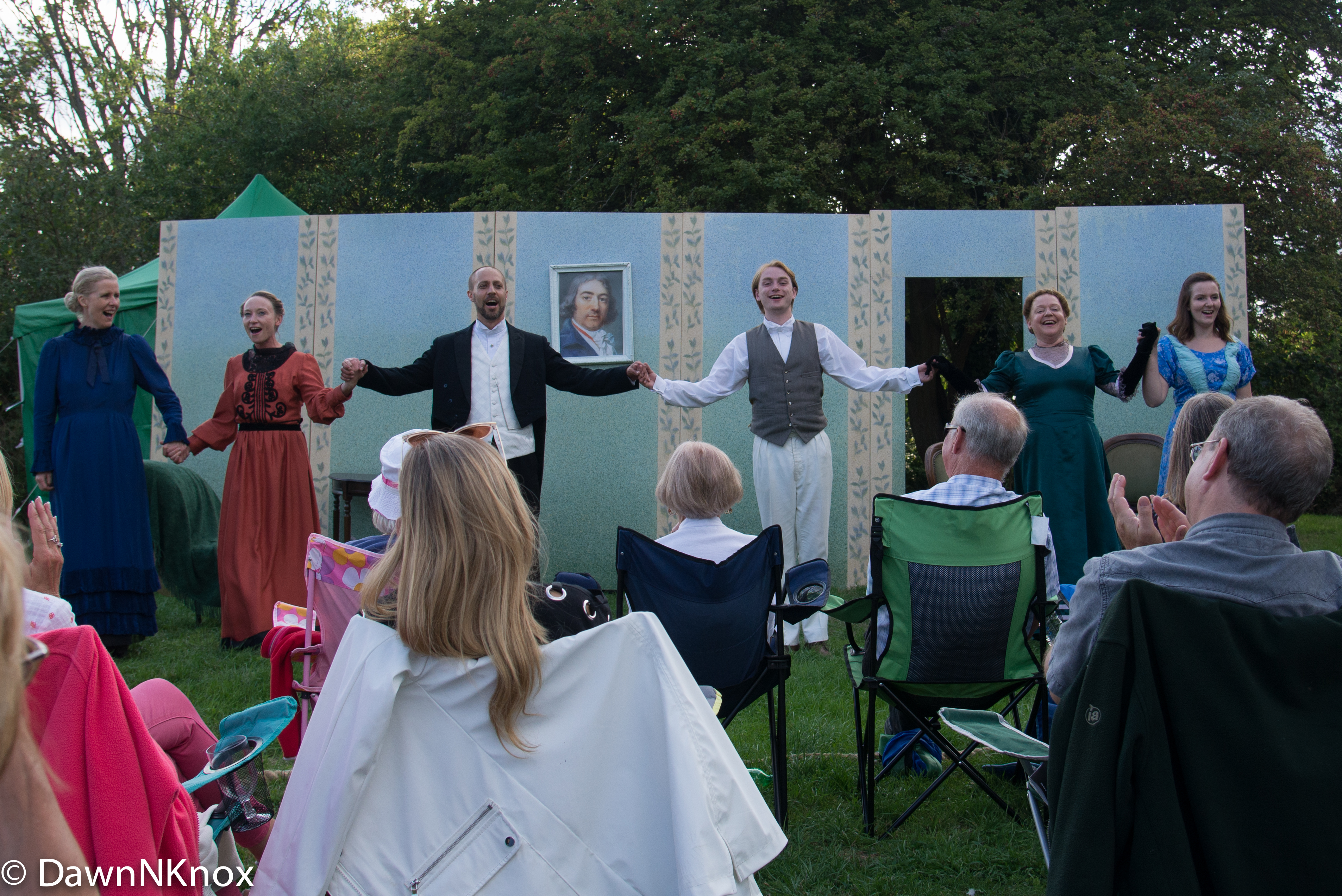
Each year, DOT Productions tour fabulous venues – some indoors and some outdoors in Essex, London and the south east of England, with a play. This year, they are performing ‘A Woman of No Importance’ by Oscar Wilde and I was lucky enough to be able to see the outdoor performance on Rayleigh Mount on Sunday 19 August. I have managed to see the last three DOT Productions’ summer tours which were Jane Austen’s ‘Emma’ and ‘Northanger Abbey’ and Oscar Wilde’s ‘The Importance of Being Earnest’ all of which were thoroughly enjoyable.

I must admit, I didn’t know much about ‘A Woman of No Importance’ before I saw it. Here is the information given in the programme:

19th April 1893

London’s Haymarket Theatre

A New and Original Play of Modern Life

After Wilde’s success with ‘Lady Windermere’s Fan’, Herbert Beerbohm Tree, actor manager of London’s Haymarket Theatre, asked Wilde to write a play for him. Rehearsals started in March 1893 and Tree enjoyed the part of Lord Illingworth so much that he continued to play it outside the rehearsal room.

The play opened on 19 April 1893 and the first performance was a great success.

Lady Caroline Pontefract and Lady Hunstanton

Lady Caroline Pontefract and Lady Hunstanton

The cast of DOT Productions are as follows: Francesca Anderson, Andrew Lindfield, Elliot Munro, Charlotte McGrory, Dawn Bush and Non Vaughan-Thomas. The producer is Louisa Marie Hunt and the director is Micha Mirto.

If you are in or around Essex and the south east of England during the rest of August and the beginning of September, there are about a dozen more performances and you can find more information about DOT Productions  here 

Cast of DOT Productions

Cast of DOT Productions

Later in the year – on Saturday 10th November 2018, DOT Productions will be performing ‘The Other Side of Peace’ in Basildon for the Forget Never Project – Sacrifice and Legacy.


20th August 2018
by Dawn Knox
0 comments

I Don’t Like Cricket… I Love It!

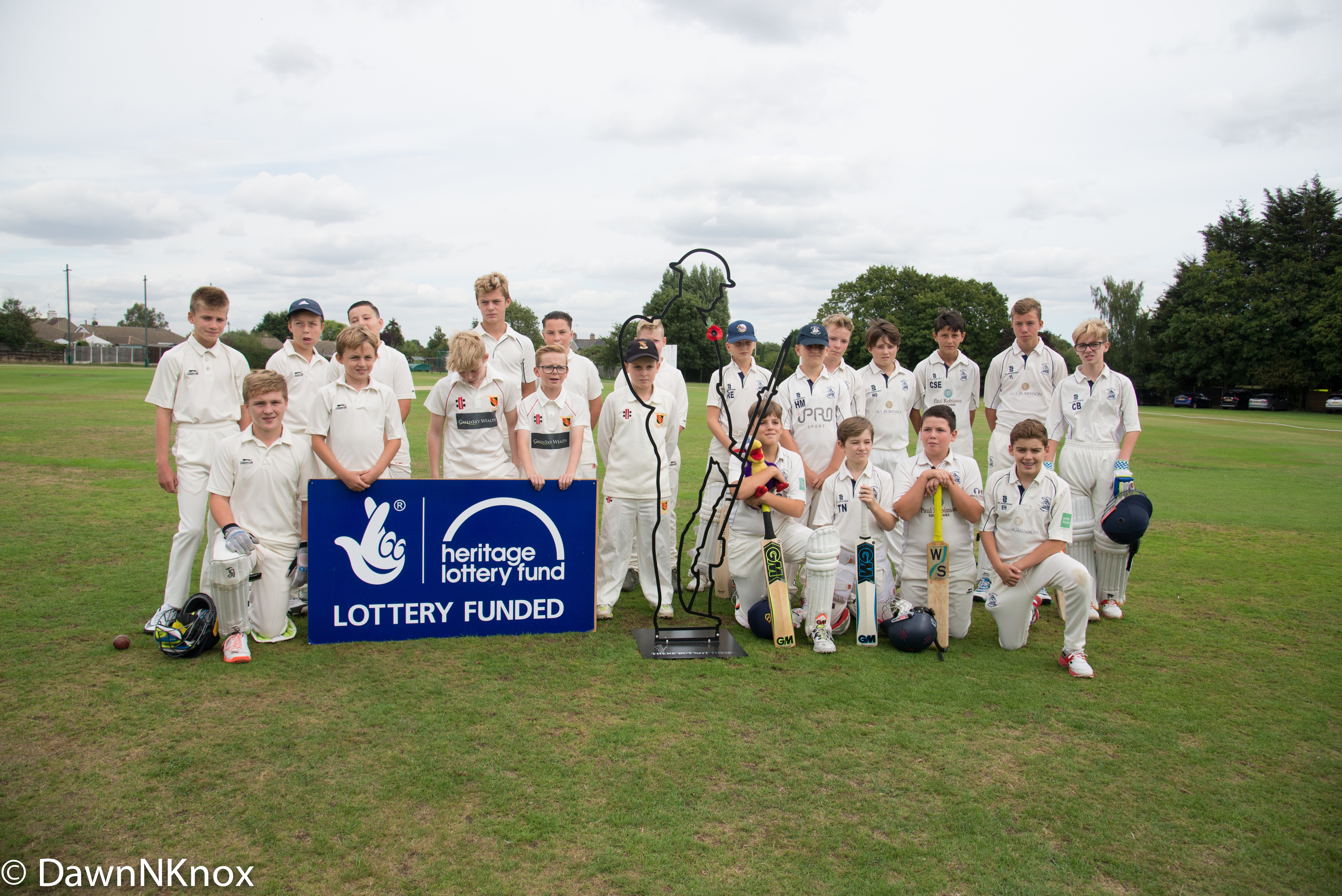
'There But Not There' Tommie

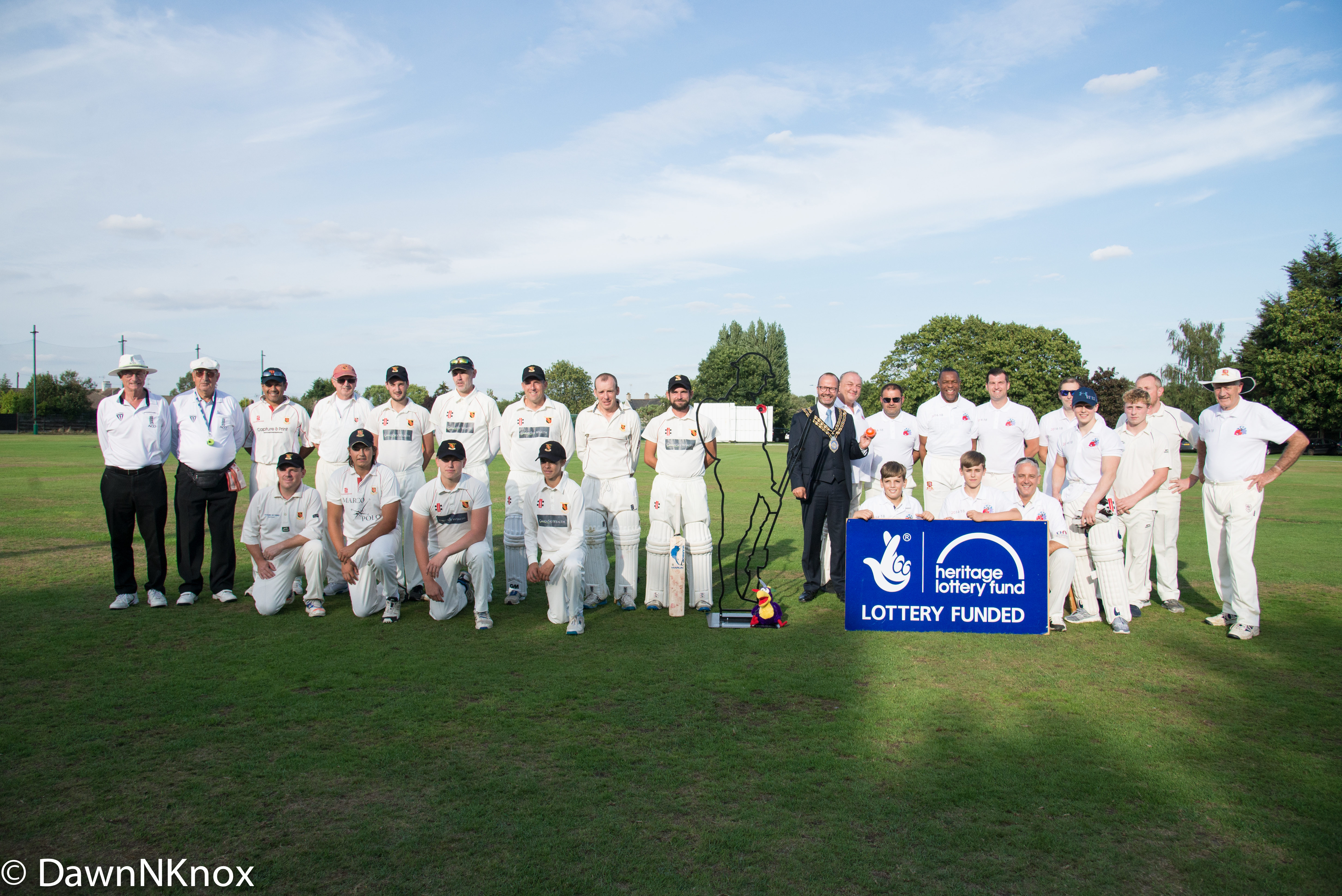
‘There But Not There’ Tommie at the cricket game

I don’t like cricket – I love it!

Well, that’s not exactly true but I certainly like it a lot more than I thought I would! One of the events held by the Forget Never – Sacrifice and Legacy Project this year was a commemorative cricket match held at Wickford Cricket Club to remember all those players from Wickford who fought in the First World War – many of whom did not return. I really enjoyed watching and photographing the action. And there was definitely plenty of action, such as the six, hit by one of the players which smashed into the club house window a few feet from where I was standing!

Members' Roll of Honour 1919

Members’ Roll of Honour 1919

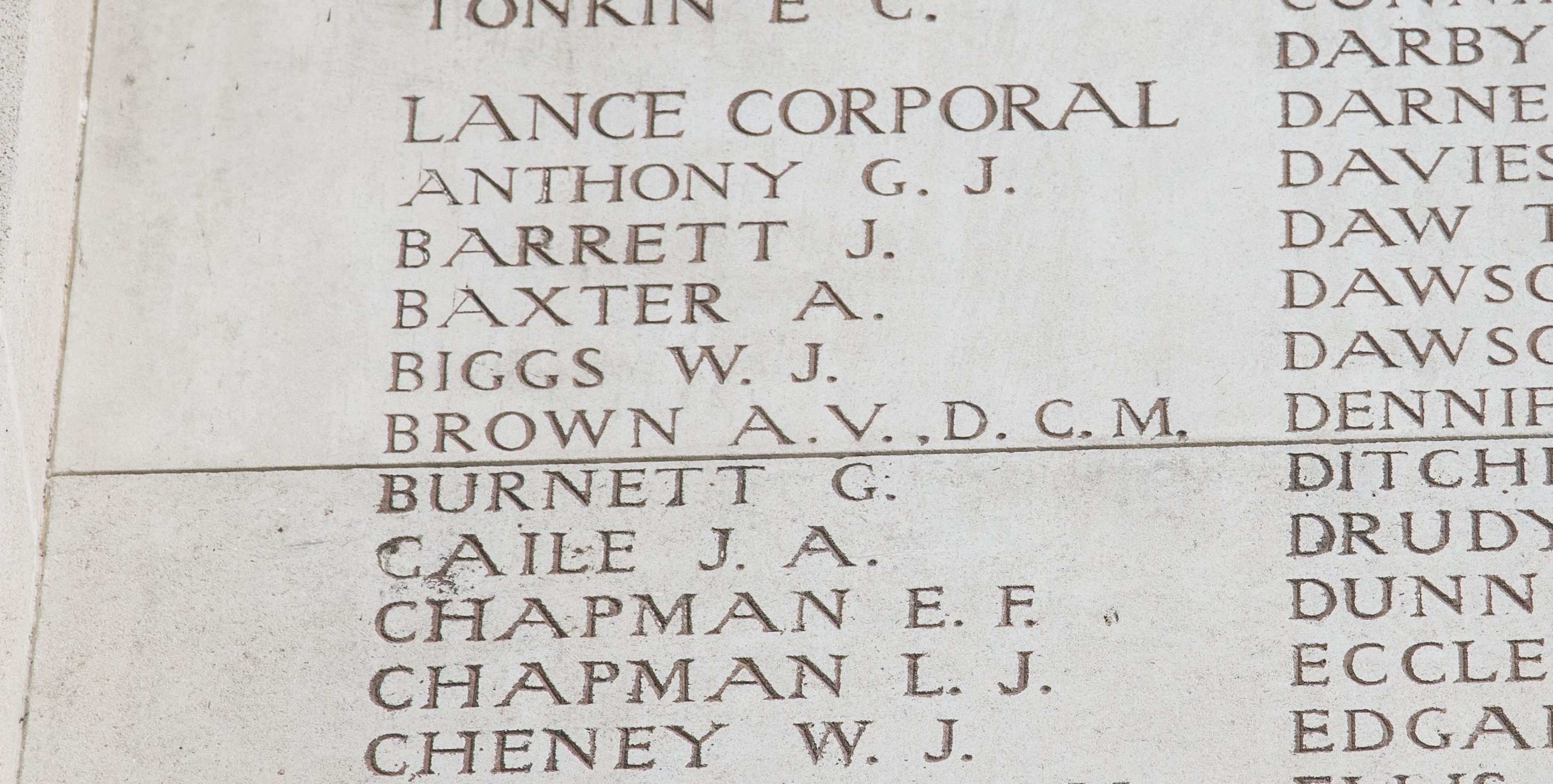
From the members’ roll of honour 1919, we know who paid their Wickford Cricket Club subs, who came back and who never returned.  As part of the Forget Never Project, we honoured a former captain of the club, PC George Burnett in a World War One play entitled ‘The Sons of Three Countries Remembered’. We have also honoured Richard Bartlett for whom we held a commemorative cricket match in 2016. Both men died during the fighting. Lance Corporal George Burnett went missing in action shortly after the beginning of the war in 1914, and he was considered killed in action, a year later. His body was never found but he is remembered on the Menin Gate. Richard Bartlett died during the Battle of the Somme in 1916.

Lance Corporal George Burnett's name on the Menin Gate, Ypres, Belgium

Lance Corporal George Burnett’s name on the Menin Gate, Ypres, Belgium

The Forget Never Project managed to contact descendants of George Burnett who joined us in our performances of ‘The Sons of Three Countries Remembered’ in England and in France as well as relatives of Richard Bartlett, who still live near Wickford and were able to join us for his commemorative match as well as for the matches played on Friday 17th August 2018.

There were two matches on 17th August – the first for the junior players – Wickford vs Billericay and then the senior match between Wickford XI and a team representing the Forget Never Project consisting of Basildon celebrities, including Brinn Bevan, Olympic gymnast and 2018 British Championships All-Around Champion. Brinn presented the trophies to the players in the junior match, as well as playing in the senior game, after a bit of coaching from one of the younger cricket players!

Brinn Bevan practising cricket

Brinn Bevan practising cricket

Other celebrity players were:

Captain –Ken Porter-Chairman of Basildon Heritage Group and author. Former player with Ilford CC and Southend CC

Chris Spooner – Local businessman, former player for Benfleet CC and has managed juniors at Wickford CC

Alex Spooner – 2013 International Junior ‘ Superstar’ Former Bromfords Schoolboy now a rising Motorcycle talent having just been offered a contract at Kent Kings.

Rob Newson AKA James Wand – Local magician performing at celebrity wedding receptions. Former player with Pitsea and Vange CC and Ingatestone CC

Martin Leslie – Head of PE at Beauchamps School in Wickford. Plays currently for Stanford Le Hope CC

Tony Ball – Cty Councillor for Wickford, Deputy Cabinet post holder for Education and Skills. Former player at Laindon CC.

Steve Newman – Chairman of Wickford Memorial Association. Member of an International group dedicated to finding soldiers missing in action.

Wayne Morgan – Former employee at the Tractor Plant. Plays for Basildon and Essex Over 50’s CC.

Matt Spencely – Works currently for Creative Sports based at Wat Tyler Park. Plays for Old Southendians

Brinn Bevan – Member of Team GB Gymnastics team at the Rio Olympic Games. Currently the reigning British All Round Gymnastic Champion.

Kyran Porter and Callum Porter who stood in for players who were unable to attend. Both are Ken Porter’s grandsons.

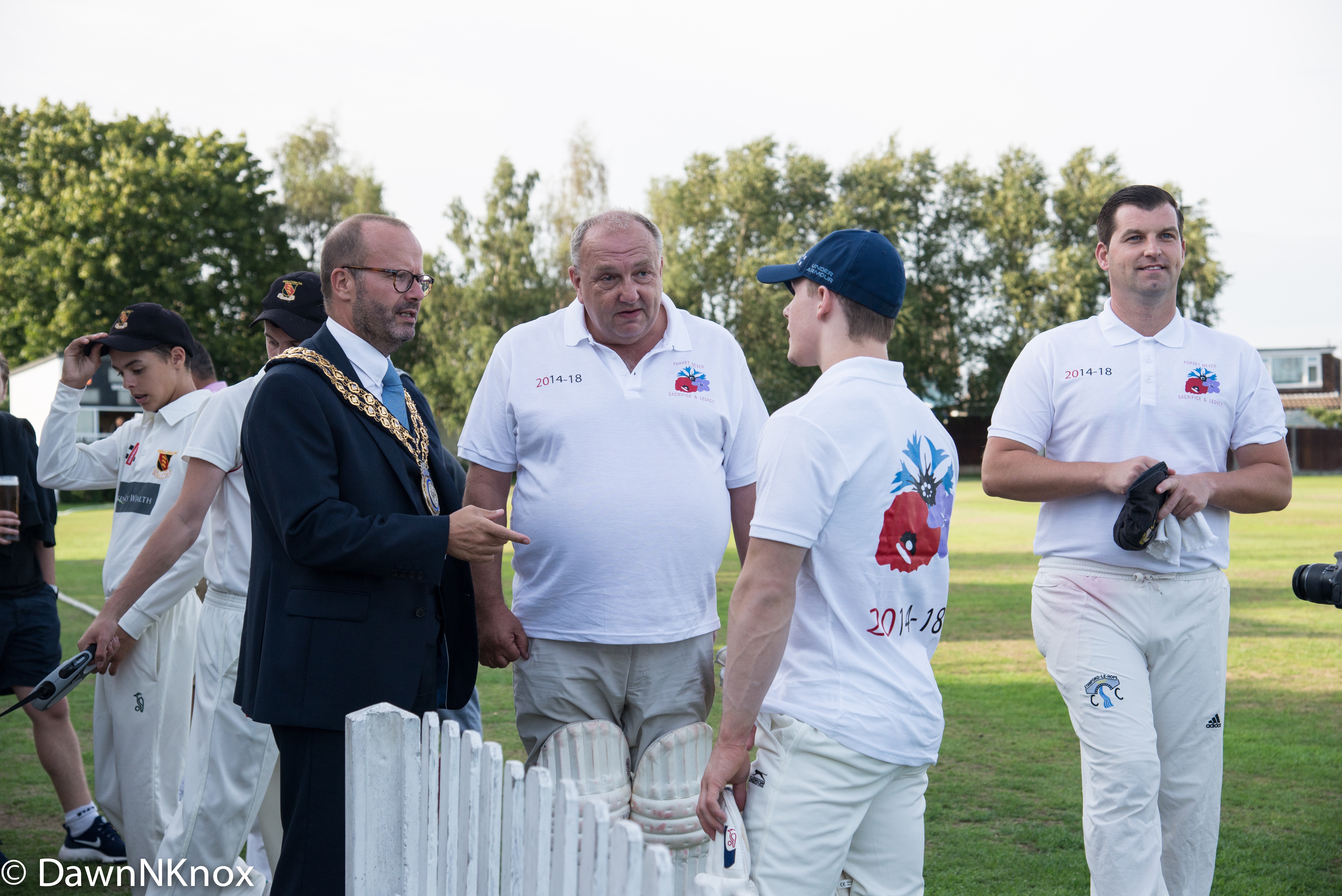
Mayor of Basildon, Councillor David Dadds, presented the trophies to all the senior players.

Mayor of Basildon, Tony Ball, Brinn Bevan and Martin Leslie

Mayor of Basildon, Tony Ball, Brinn Bevan and Martin Leslie

After the cricket, Magic Circle Magician, James Wand did some amazing magic tricks for the crowd.

Magician James Wand amazing the crowd and Brinn with his tricks

Magician James Wand amazing the crowd and Brinn with his tricks

Junior teams - Wickford and Billericay

Junior teams – Wickford and Billericay

Senior teams - Wickford XI and Basildon Celebrities

Senior teams – Wickford XI and Basildon Celebrities

I still don’t really know how the scoring works, but I understand the winner of the junior match was Billericay and of the senior match was Wickford although everyone was presented a trophy – winners and losers alike. The event wasn’t so much about winning but about remembering.

If you’d like to see all the photos of the matches, click here 

If you want to find out more about the Forget Never – Sacrifice and Legacy Project, click here 

12th July 2018
by Dawn Knox
0 comments

The Evocative Smell of School

Privet hedge and flowers - the smell of breaking up for school holidays

The smell of flowers on the privet hedges is strong at breaking up time!

The Evocative Smell of School

It’s that time of year again.

Yes, in England, the schools are about to – or may even have already – broken up for the summer holidays. I don’t have any school-age children in the family, so there’s no reason for me to remember, but I always know when it’s nearing the end of the summer term because I can smell it in the air! It’s the scent of privet flowers which admittedly isn’t quite as strong as it used to be when I walked to school years ago but nowadays, there are still many gardens which contain a privet hedge. When I was of school-age, many front gardens in my neighbourhood were bordered by privet hedges (Ligustrum ovalifolium) which for eleven months of the year were so dull to my young eyes, they were almost invisible, but in the middle of July, they flowered and the smell of the blooms was quite striking. So striking that even now, many years later, it evokes the feeling of excitement which accompanied the final few days of term when lessons were more relaxed and there were lots of interesting outings. And then of course there was the prospect of six blissful weeks of freedom.

As I walked home from a friend’s house the other day, I detected the scent of privet flowers and it prompted me to think about the other smells that I remember from school such as the strange aroma of the changing room – a mixture of dust, wood and old plimsols (do you remember plimsols?). And how about the dining hall? Hmm, well, that evokes cabbage and custard! I’m sure there were more pungent foods which were included in that heady mixture, and I think I simply remember the foods which I loathed most!

How about you? Do any smells remind you of school? And if you had a dining hall, which foods do you think contributed to that complex, pervasive aroma?

If you have any school-age children who are about to break up and would like a book to read, Daffodil and the Thin Place is about a 21st century girl who’s caught up in a 19th century school. Smells are probably the least of her worries! The e-book and paperback can be found here Daffodil and the Thin Place  All royalties will go to the Belfast Hospital School.

16th June 2018
by Dawn Knox
0 comments

Waterloo Festival 2018 – To Be… To Become

Cover of TO BE... TO BECOME ebook launched at the Waterloo Festival

Cover of TO BE… TO BECOME ebook launched at the Waterloo Festival

The Waterloo Festival 2018 is currently in full swing. This year, it has the theme ‘Transforming Minds’ and it aims to inspire and celebrate through innovative art and music.

On Thursday 14th June 2018, I was part of the festival, at the launch of Word Weekend as I was one of the winners of the Waterloo Festival Writing Competition. The Word Weekend will include street theatre, workshops, a book fair and more, in St. John’s Church, Waterloo Road, Waterloo and you can find out more details about the Waterloo Festival programme here

The Waterloo Festival Writing Competition was judged by Gill James of Chapeltown Publishing who has compiled an ebook of the sixteen winning entries entitled ‘TO BE… TO BECOME’. Gill said “Some fantastic writing was offered and all of it was potentially publishable. We chose these because they told a good story, had a strong voice and were imaginative in their interpretation of the theme. Entrants were asked to produce a short story or a monologue. Style was diverse and each story is completely different from the others.”

Each of the authors was invited to read an excerpt from their story and ten of us were able to attend on the evening of the launch. We had been asked to wear a hat of our choice and warned that we would be reading from one of the podiums. I was quite intrigued to see the ‘podiums’ which were actually two pulpits on wheels, placed side by side!

The readers alternated between pulpits to decrease the waiting time for the audience. My story is entitled ‘NEVER A COWARD’ and is set during World War One and as Gill said, she chose stories which varied widely in style and content – for example, a story told by a ghost, one about a refugee and another about students turning into rats! If you’d like to read ‘TO BE… TO BECOME’, it’s available on Amazon, here  

Thanks to fellow winner, Paula Readman for taking the photo of me reading and here’s a photo I took of her. Check out those hats!

Me with my hat, reading 'Never a Coward' on the podium at the Waterloo Festival

Me with my hat, reading ‘Never a Coward’ on the podium at the Waterloo Festival

Paula Readman on the podium reading her winning entry at the Waterloo Festival

Paula Readman on the podium reading her winning entry at the Waterloo Festival

15th June 2018
by Dawn Knox
2 Comments

Memories of Barbados

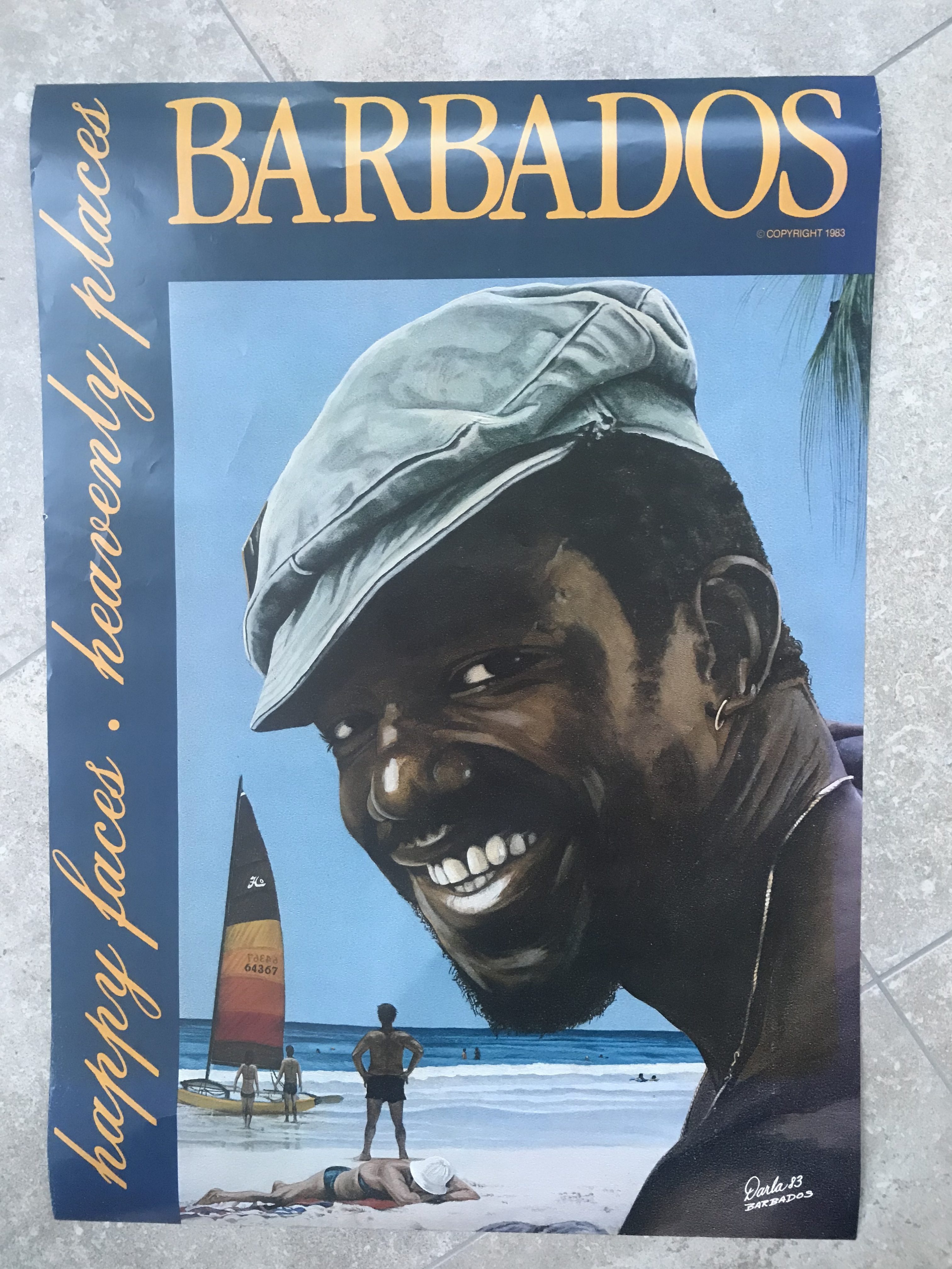
David from Barbados

David from Barbados

Memories of Barbados

In 1989, I went on holiday to Barbados with Jamie and our eight-month old son. On our first day, Jamie walked into the sea and emerged several minutes later with two spines in the sole of his foot, having trodden on a sea urchin. We were wondering how much of a disaster this was when a man wandered by and asked if he could help. When we explained what had happened he said he could remove the spines for Jamie and took out a safety pin from his pocket and while he worked on Jamie’s foot, he told us that his name was David and chatted in a very friendly way. After he’d removed the spines, he recommended that we get some antiseptic cream to ensure it didn’t get infected. I can’t remember how we discovered that a friend of his had painted him for a promotional poster for Barbados but somehow, we acquired one of them and brought it home.

Last year, when we were having a major tidy up, we decided that since we’d never hung the poster on the wall, it was time to throw it out. But neither of us could quite do it and although it made it into the recycling bag, it was very quickly rescued and reinstated to the box of pictures which still have to be hung in our house. I can’t see it ever making it to any of the walls and I think it’s one of those things we’ll just hang on to – despite trying to be ruthless in our tidying up. But it is a lovely reminder of  a friendly man with a lovely smile who was kind enough to stop and help two tourists.

I don’t suppose David will ever see this but just in case, thank you for all your help.

Leave a Reply

Your email address will not be published. Required fields are marked *

2 responses to “Memories of Barbados”

  1. Elliott & Wendy avatar
    Elliott & Wendy

    We first met David in 2014 and were very impressed with the kindness and good humor of this lovely man. Imagine our supprise when we returned to Barbados in 2023 and found him again in the same spot! All that you said about him is true.

    1. Dawn Knox avatar
      Dawn Knox

      Oh, how wonderful that you met him too!

Leave a Reply

Your email address will not be published. Required fields are marked *

9th June 2018
by Dawn Knox
0 comments

A Question of Timing

Clocks - A Question of Timing

A Question of Timing

A Question of Timing

Everyone’s busy these days, so what could be better than a short story? Fewer than 2,000 words can be read relatively quickly – while you’re waiting for a bus or train… At the dentist… While all your friends are checking Facebook… There are always a few minutes when a short story could come in handy.

Look no further! Here are a collection of my short stories published on the CafeLit website. From each story, one or more characters are taken and appear in the following story, a bit like a relay race. The whole thing  starts with a story about Derek Carruthers. He’s a man who is always short of time. He’s also socially inept and thoroughly tactless. Derek decides to go speed dating. What could possibly go wrong?

You can read A QUESTION OF TIMING here 

In the following story, Mary Wilson has decided she will one day set up MaryWorld where there will be no interfering mothers and curly, ginger hair will be compulsory. She can’t wait for the day when she can move to MaryWorld. Until then, in order to stop her mother interfering, she has to go on a date with Derek Carruthers.

You can read IN MARYWORLD here

Mary Wilson’s next door neighbour, Florrie Fanshawe runs a Knit and Natter club where there’s plenty of knitting and lots of nattering. Bella Carrossetti, (with two R’s, two S’s and two T’s) has joined and is keen to give everyone beauty tips. Whether they want them or not.

You can read KNIT AND NATTER here

In ‘Mint Pink’, Bella Carrossetti’s uncle, Toby Jugg, decorates Edna Harbottle’s house against her better judgement. He persuades her to have her living room painted in Mint Pink. As he explains, mint is only green when it’s not pink.

You can read MINT PINK here

Toby’s brother, Sydney, is a man who neither forgives, nor forgets. In his Book of Grievances, he records every insult and injustice that he suffers. When he meets Vilya Chekarova, Sydney needs a new Book of Grievances, one dedicated solely to her.

You can read SYDNEY JUGG’S BOOK OF GRIEVANCES here 

Ichabod Bunch is a clairvoyant and medium extraordinaire. Everyone agrees he has lovely eyes. Betty Bentwhistle, Sydney Jugg’s new lady friend, thinks Ichabod is amazing and hangs on his every word. Sydney would like to punch his lights out.

You can read IS THERE ANYBODY THERE? here

Betty’s Aunt Edie is in the Willows Retirement Home. She’s desperate to be voted in as the home’s Leisure Organiser so she arranges for Ichabod Bunch to appear in the home. What a shame that Matron doesn’t approve of Mediums.

You can read GOING FREELANCE here


There are two further stories in the series which are in the pipeline… stay tuned for more…

12th April 2018
by Dawn Knox
0 comments

Visits to Gateway 97.8fm Radio

Jacqui, Peter and me in a Gateway 97.8fm frame!

Jacqui, Peter and me in a Gateway 97.8fm frame!

Visits to Gateway 97.8fm Radio
I was recently very lucky to be invited to be on Basildon’s Gateway 97.9fm radio on two consecutive Wednesday afternoons with host Jacqui James and her team – Steve and Peter. My first time was on Wednesday 04 April 2018 and I was invited on to talk about my collection of short stories, EXTRAORDINARY, and to read out a short story from the book, after the three o’clock news.

EXTRAORDINARY book

EXTRAORDINARY a collection of stories that will take you out of this world

Unfortunately all of the stories except one were slightly too long for the time slot available. However, that particular story probably wasn’t a good choice for a Wednesday afternoon during school holidays since it featured a rather unusual fairy (no spoilers here!) Instead, I read out two stories which had been accepted for an anthology entitled ‘ESSEX BELONGS TO US’, assembled by Malcolm Burgess and Heather Reyes and published by them in 2017.

Essex Belongs to Us book

Essex Belongs to Us book

On my first visit, I read a story called ‘TO BE A MUNITIONETTE’ which is a fictional story of a girl who worked at the Pitsea Explosives Factory during World War One. I tried to keep the facts used in the story as accurate as I could so it gave some information about what it was like to be a munitionette and the conditions that the factory employees worked under. The site of the old factory was in what is now Wat Tyler Country Park, Pitsea and there is a trail around which you can walk and still see remains of what was once a thriving factory providing cordite and explosives for our troops at the Front during World War One.

During my second visit to the radio studios, I read the other story which appears in ‘ESSEX BELONGS TO US’ which is called ‘A PLOTLAND TALE’ and is a story about an elderly woman who returns to what had been her home in Dunton Plotlands. Again, I tried to be faithful to the facts about that area during the 1930s, up to the Second World War.

Jacqui James was the host of the Wednesday afternoon programme on Gateway 97.8fm and she made me very welcome, as did Steve and Peter, who were working with her to broadcast the show. There was a great atmosphere in the studio and I learned about Faberge eggs and the age of fruit before it reaches the supermarket shelves! And, apparently my first trip coincided with National Rat Day, hence the rat on the desk!

Rat on the desk

National Rat Day!

Jacqui and me by the Gateway 97.8 sign

Jacqui and me by the Gateway 97.8 sign

Thanks to Basildon’s local radio, Gateway 97.8fm, Jacqui, Steve and Peter for making me so welcome!

If you’d like a copy of ‘ESSEX BELONGS TO US’, you can find it here on Amazon

If you’d like to find out what was so different about the fairy in the short story in ‘EXTRAORDINARY’, you can find it here on Amazon along with ten other short stories.

26th March 2018
by Dawn Knox
0 comments

From Guildhall to Spitalfields – Another Jaunt in London

From Guildhall to Spitalfields – Another Jaunt in London

My cousin Dave and I went on a jaunt in London the other day, looking for more Roman remains. As usual, we got distracted and ended up seeing more than we’d intended – but that’s the joy of wandering the streets of London sniffing out all the history we can fit into one day! The trains into Fenchurch Street Station were disrupted so we ended up at Liverpool Street Station and although we’d planned to go to the Guildhall, then return to Spitalfields, we got sidetracked and went to Spitalfields first, then Guildhall and then returned for another look round Spitalfields.

First we visited Christ Church in Spitalfields and met a lovely lady called Ava, who apparently had shared a stage with evangelist, Billy Graham years ago. She even offered to sing for us! Well, how could we say no?

There is a cafe in the crypt and after tea, Dave and I found some old clay pipes in a display case with information about the church and some notable people involved with it. For example, in 1795, Samuel Henshall, curate of Christ Church invented the corkscrew. And in 1751, John Wesley preached in the Christ Church for the first time.

Information about Christ Church, London

Information about Christ Church (me in the reflection!)

After our detour, we decided to go straight to the Guildhall as planned but unfortunately, as often happens to Dave and me, we got lost. It wasn’t all bad news though because we ended up in the very colourful Brick Lane with its amazing selection of restaurants and wonderful street art.

Street art just off Brick Lane, London

Street art just off Brick Lane, London

And on our way back to Spitalfields, we passed a fashion college where we saw models posing for a photographer by a rubbish bin!

Models posing outside a fashion college

Models posing outside a fashion college

Finally, we made it to the Guildhall and although we didn’t see the Harrison clocks which apparently are now in the Science Museum in South Kensington, we did see the Roman amphitheatre – or what’s left of it – in the basement.

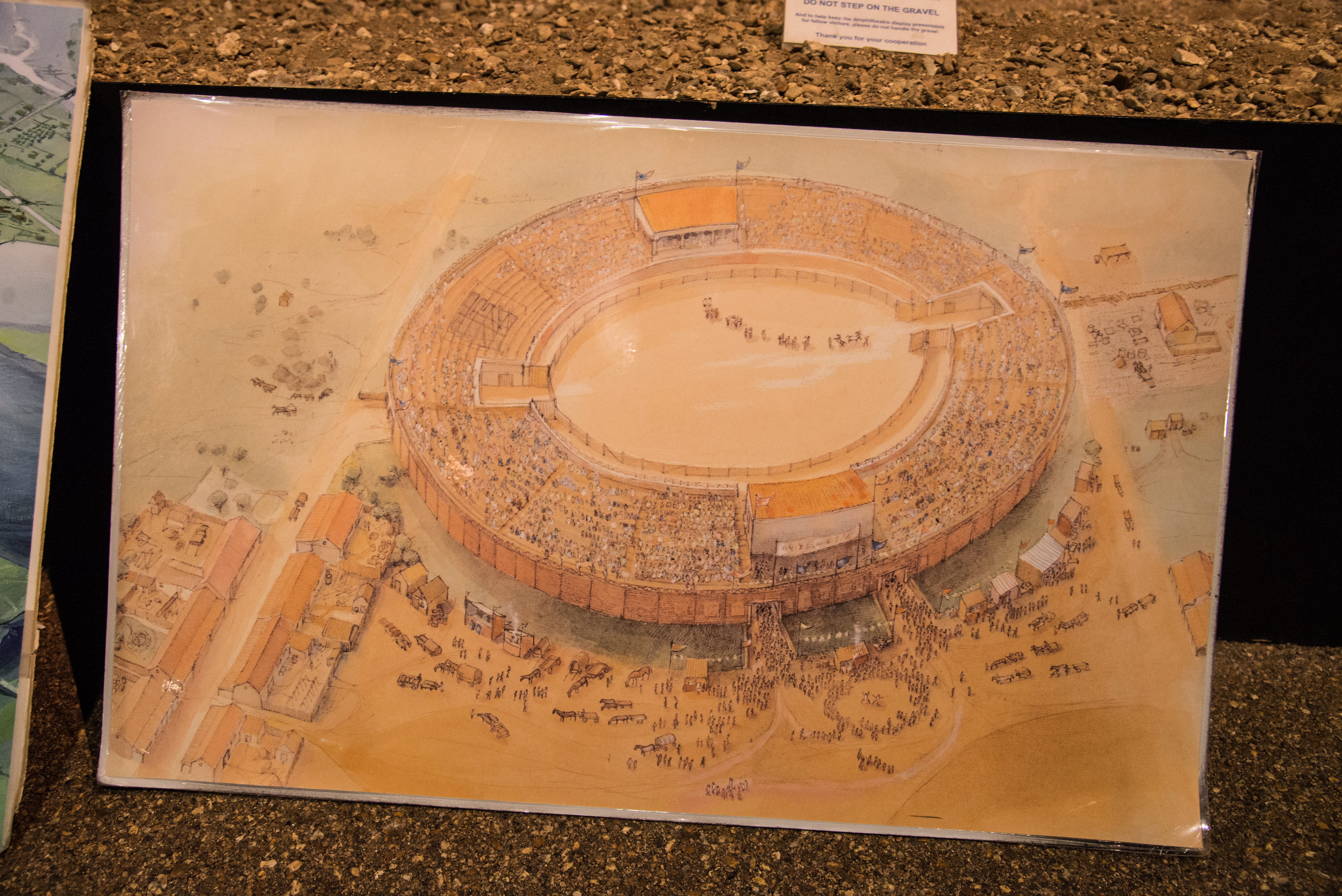
Image of what the Roman amphitheatre would have looked like

Image of what the Roman amphitheatre would have looked like

This is an image of what the Roman amphitheatre would have looked like when London was known as Londinium.

Ruins of walls of the Roman amphitheatre in the Guildhall

Ruins of walls of the Roman amphitheatre in the Guildhall

What remains today is part of the approach to the arena although there are still wooden drains which can be seen, protected under glass.

Amphitheatre's wooden drain

Amphitheatre’s wooden drain

Another unscheduled stop was in the intriguingly named St. Lawrence Jewry Church. So called because the original twelfth century church stood on the eastern side of the city, then occupied by the Jewish community. That church, built in 1136 was destroyed along with a great deal of London during the Great Fire of 1666. The building which replaced it, was designed by Sir Christopher Wren in 1680. It was almost completely destroyed by fire again, in 1940 and restored in the tradition of Wren’s building in 1957. Today, it is the church of the Corporation of London and is situated next to the Guildhall.

Then it was back to Spitalfields and a look round the flea market on the site of the old Spitalfields Market. Spitalfields takes its name from the hospital and priory, St. Mary’s Spittel that was founded in 1197. It was in a field next to the priory where the now famous market first started in the thirteenth century and in 1682 King Charles II granted a Royal Charter for a market to be held on Thursdays and Saturdays in or near Spital Square.

Spitalfields had been relatively rural until the Great Fire of London. By 1666, traders had begun operating beyond the city gates – on the site where today’s market stands. The success of the market encouraged people to settle in the area and following the edict of Nantes in 1685, Huguenots fleeing France brought their silk weaving skills to Spitalfields. Their grand houses can still be seen around what is now the conservation area of Fournier Street.

The Huguenots were soon followed by Irish weavers in the mid-1700s following the decline in the Irish linen industry and subsequently, many of whom would work on the construction of the nearby London docks.

The Irish were followed by East European Jews escaping the Polish pogroms and harsh conditions in Russia; as well as entrepreneurial Jews from the Netherlands. From the 1880s to 1970s Spitalfields was overwhelmingly Jewish and probably one of the largest Jewish communities in Europe with over 40 Synagogues.

Dave and I visited one synagogue – Sandy’s Row Synagogue and it was fortunate that although we arrived it had closed for the day, a meeting was taking place in the synagogue and before it began, we were allowed to wander inside.

Inside Sandys Row Synagogue

Inside Sandys Row Synagogue

Inside Sandys Row Synagogue

Inside Sandys Row Synagogue

The site of Sandys Row Synagogue was once open-land called Old Artillery Gardens next to the pasture-land of Spital Fyeld’s, which was named after Henry VIII’s royal artillery, the ’Gunners of the Tower’ who used this place for experimenting with ‘great and small artillery’ in the sixteenth century. In 1600s, it is believed a wooden chapel was erected on this site and used by French Huguenot Protestants.

In 1766 a brick building called L’Eglise de l’Artillerie (the Artillery Church) was erected on this site, this is the same building that stands there today. The Artillery Church merged with the London Walloon Church in 1786, and then for the next fifty years, the church was let to other christian groups; including the Unitarian and Scottish Baptists before becoming known as Salem Chapel and then Parliament Court Chapel.

In the 1840s Dutch Ashkenazi Jewish migrants mainly from Amsterdam began arriving in Spitalfields. They were economic migrants seeking a better life, rather than refugees fleeing persecution like the thousands of Ashkenazi Jews who came after them in the 1880s. The Dutch Jews occupied the narrow maze of streets in this area and continued to practise the trades they had bought with them from Holland, which were predominately cigar making, diamond cutting and slipper and cap making.

Within this area a small, distinctive, tight knit and self-sufficient Dutch Jewish community was formed of about a thousand people. They had their own practices and customs, which were different from other Ashkenazi Jewish groups. To the frustration of the more established Anglo-Jewish population living in the area at the time, ‘the Chuts’ (as they were known locally) refused to join any of the existing synagogues. Instead they rented a small room in a building on Whites Row Spitalfields, (close to Sandys Row) where they held daily prayer meetings and Shabbat services.

In 1854 fifty Dutch Jewish families from this community began fundraising. In 1867 enough funds had been amassed to purchase the lease on the chapel in Sandys Row, which the society had been renting for sometime, the building was known as The Parliament Court Synagogue.

If you would like to read more about the history of Sandys Row Synagogue, click here

Dave and I had hoped to visit Dennis Severs’ House in Folgate Street, Spitalfields which gives an insight into the home life of a family of Huguenot silk-weavers from 1724 to the 20th century but sadly, it was closed and that reminded us that if we wanted to avoid rush hour, we’d better head back to Liverpool Street.

If you’d like to see more photos of our jaunt, you can see them here on Flickr

Dave and I will be doing more jaunting in London soon!

16th March 2018
by Dawn Knox
2 Comments

Inspired by the Hooge Crater

Hooge Crater

Hooge Crater

Hooge Crater

This was inspired by a recent visit to the Hooge Crater, scene of terrific fighting during the First World War, in Belgium, about four kilometres from the town of Ypres. Originally the grounds were part of a chateau at Hooge which was used by the Allies a a divisional headquarters. Several senior British officers were killed when it was shelled and destroyed. The land was mined and blown up several times, resulting in a deep crater. This changed hands several times, as it was won and then lost, resulting in great loss of life. There was intense and sustained fighting in this area during three years and as well as the chateau being destroyed, the village was also wiped out. Today, in the Hooge Crater, there are reminders of the fighting, such as trenches and shells, but today, it is a tranquil place.
Hooge Crater

A century ago, mines exploded in the Belgian countryside, leaving a deep crater. Men died here in their thousands as it repeatedly changed hands.

Ours.

Theirs.

Ours.

Theirs.

The price of ownership paid in men’s lives.

Today, Nature is reclaiming the crater, painting it her signature colours of green and brown. The harsh lines of the concrete bunkers are softened with moss and a pond lies at the base of the crater. Nearby, discarded shells lie rusting and blue tits live in the barrel of a field gun.

Eventually, Nature will erase all traces of devastation.

LET US NOT FORGET.

25th February 2018
by Dawn Knox
0 comments

Book Awards – So Dreams Really Do Come True!

So, dreams really do come true! Okay, admittedly, I haven’t actually won anything. The winners will be announced on 1st April 2018 but until then, I’m thrilled to be a finalist in the Wishing Shelf Book Awards 2017. This may be as good as it gets in my writing career, so I’m certainly going to appreciate it while I can.

The Wishing Shelf Book Awards Finalist 2017

The Wishing Shelf Book Awards Finalist 2017

The Wishing Shelf Book Awards Finalist 2017

The Wishing Shelf Book Awards Finalist 2017

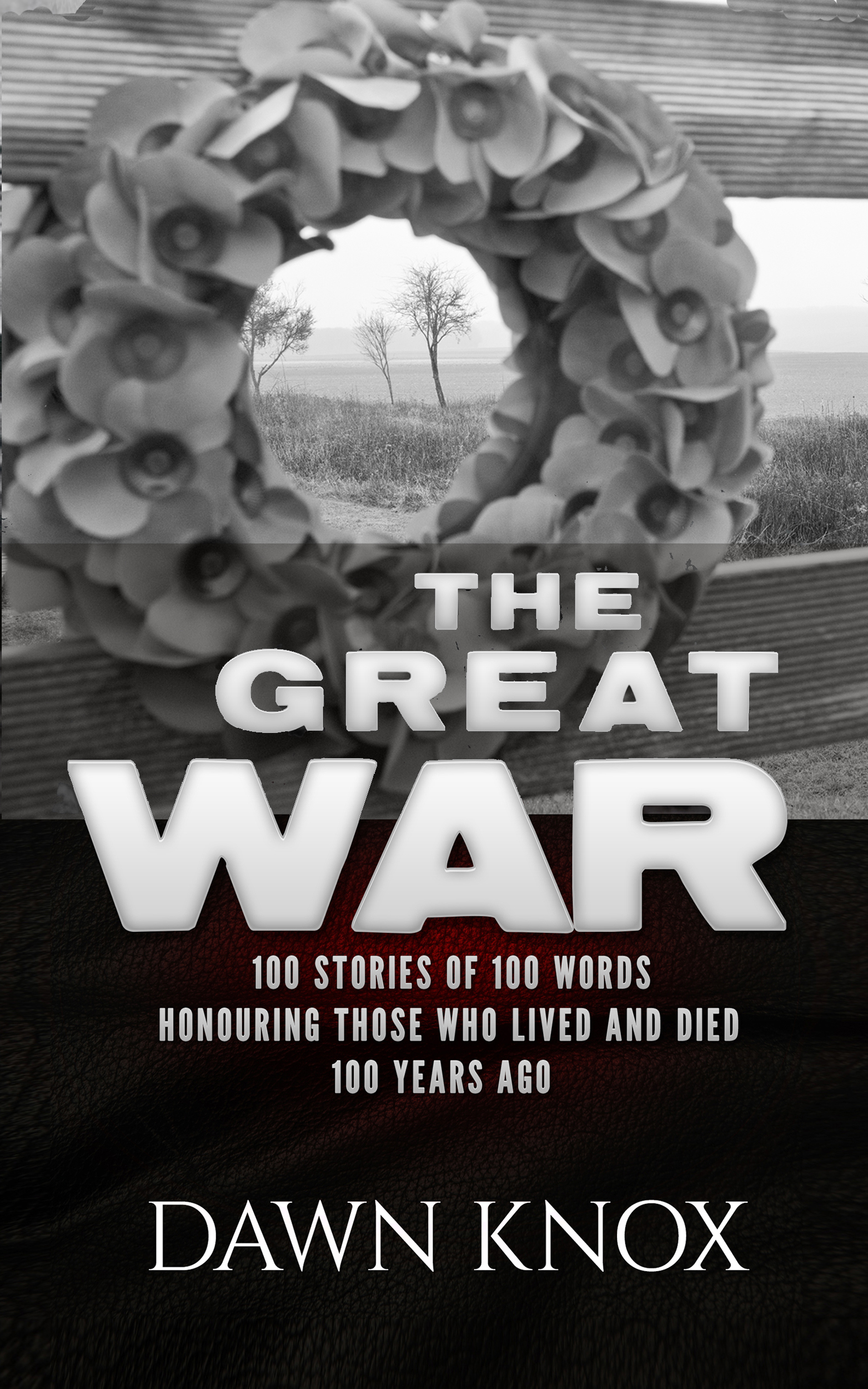
The Great War - One Hundred Stories of One Hundred Words Honouring Those Who Lived and Died One Hundred Years Ago

The Great War – One Hundred Stories of One Hundred Words Honouring Those Who Lived and Died One Hundred Years Ago


If you’re wondering how it was selected, the adult books (my book is in the adult fiction category) were chosen by two reading groups, one in London and one in Stockholm. The books were marked according to EDITING, THEME, STYLE and COVER and every book that was awarded over 30/40 was considered a finalist. So, many thanks to those people in the Wishing Shelf Book Awards London and Stockholm reading groups for awarding me over 30!

If you haven’t read it and you’d like to know what the fuss is about, a paperback copy is £5.00 and the ebook is £0.99 from Amazon and they can be purchased here 

So, what’s the book about? Well, it pretty much describes itself on the cover as it is exactly one hundred stories and each one is exactly one hundred words (not including the title which I’ve tried to restrict to two words) and they offer glimpses into the lives of people who lived one hundred years ago during the Great War. It’s not a history book, but the stories are based on real events and sometimes real people. It is my tribute to them.

If you’d like to check out the reviews first, it has 29 reviews – 27 of them are 5star reviews and 2 of them are 3star reviews. You can find the reviews here on Amazon

I’ve been told that tissues are also needed but I’m sure you’ll have some of those already.

If you buy the book please consider leaving an honest review on Amazon – good or bad, whatever you think. Thanks!